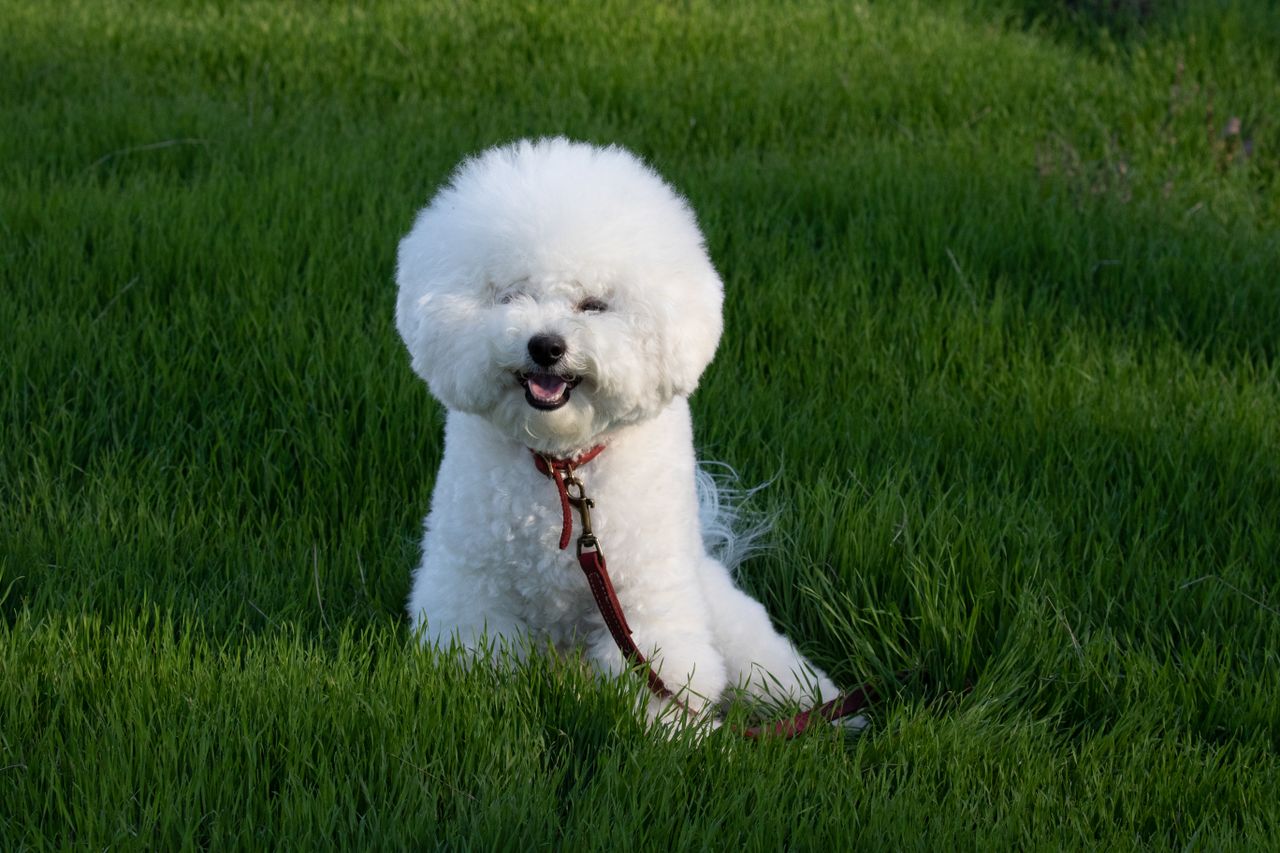
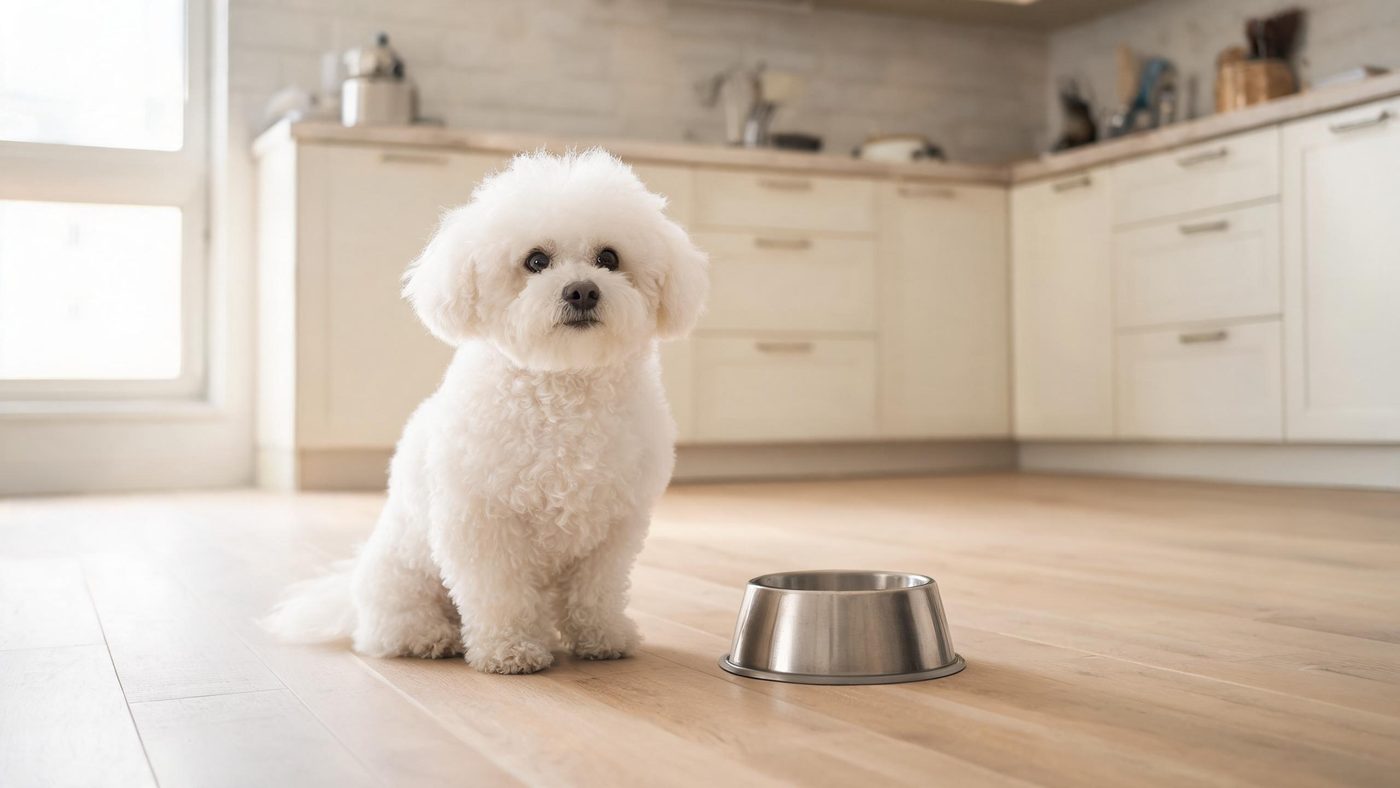
Best Food for Bichon Frise With a Sensitive Stomach: Change One Thing at a Time
You did not get a Bichon Frise so you could spend your weekends reading guaranteed-analysis panels like a tax return. You got a small white dog with a big personality, and somewhere around week three his stomach started making noises that sounded like a plumbing emergency. Soft stools, a gurgling belly at 2 a.m., and the grass-eating ritual on every walk. Finding the best food for Bichon Frise with a sensitive stomach is genuinely a shorter list than the internet makes it look — but it hinges on something nobody tells you, and it is not the brand.
Here is the part that took us two years and a lot of wasted kibble to learn: the food was rarely the whole problem. We changed foods every ten days, which meant we never actually finished testing any of them. Every switch reset the clock, the stools stayed soft, and we blamed the food instead of the method. Once we slowed down and changed one variable at a time, the answer showed up in about two weeks.
If you want the short version first: start with a salmon-and-rice small-breed kibble built for sensitive skin and stomach, transition over a full ten days, and do not change anything else while you wait. Everything below is why that order matters, the rest of the shortlist, and how to tell a food problem from a vet problem.
In this guide:
- Why Bichons get sensitive stomachs
- How to choose a sensitive stomach food
- Best food for Bichon Frise with a sensitive stomach, compared
- Our pick, and the honest caveat
- More options worth a look
- The two-week test that actually works
- Foods and habits that make it worse
- When it is not the food at all
- FAQ
Why Bichons Get Sensitive Stomachs
If your Bichon has a delicate gut, you are not imagining it and you are not alone. “Do Bichon Frises have sensitive stomachs?” is one of the most common questions new owners ask, and the honest answer is: more often than the breed’s cheerful face suggests. A Bichon Frise sensitive stomach is also one of the most common reasons people start reading ingredient panels at all, and it is why this article spends more time on method than on brands. Three things are usually stacking on top of each other.
Small dogs have less room for error
A twelve-pound Bichon eats roughly a cup of food a day. That means one bad mouthful is a much bigger share of his total intake than it would be for a Lab. A treat that would be a rounding error for a big dog can be a genuine digestive event for a small one. Small breeds also tend to have a faster gut transit time, so when something disagrees, you usually find out within a few hours rather than the next day.
Bichons are an allergy-prone breed, and allergies show up in the gut too
This breed is well known for itchy skin, and food sensitivity in dogs often presents as both skin and gut signs rather than one or the other. If your Bichon has a sensitive stomach and is licking his paws, rubbing his face, or scratching more than usual, that combination is a real clue. We wrote a whole article on why Bichon Frise itchy skin is so common and how to tell the difference between environmental and food triggers, because the two get treated very differently.
Fat level, not protein, is the usual trigger
When owners hear “sensitive stomach,” they picture a protein problem. In practice, a rich, high-fat formula is the more common culprit in small breeds — especially the ones marketed as premium, grain-free, or “ancestral.” A very fatty meal is also one of the things that can set off pancreatitis in a small dog, which is a much more serious problem than a soft stool. So before you blame chicken, check the fat number.
And then there is the switching itself
A dog’s gut has a bacterial population adapted to whatever he has been eating. Change the food overnight and that population has to rebuild. Most dogs manage it; a sensitive one does not. A huge share of “my Bichon cannot tolerate anything” cases are actually “my Bichon has been switched abruptly six times this year.”
If portion size is part of your puzzle — and it often is, because overfeeding produces exactly the same soft-stool picture as a bad food — our guide to how much to feed a Bichon Frise walks through the math for a dog this size.
How to Choose a Sensitive Stomach Food for a Bichon
You can ignore most of what is printed on the front of the bag. The back of the bag, and about four numbers, are what matter when you are narrowing down the best food for Bichon Frise with a sensitive stomach.
Filter 1: one named animal protein
Look for a single, specific protein — “salmon,” “lamb,” “turkey,” “whitefish” — not “meat meal,” “poultry,” or “animal digest.” If a food lists four proteins, and your dog reacts, you have learned nothing and you have to start over. One protein means one clean test.
Filter 2: fat in the mid-teens, not the twenties
For a small breed with a touchy gut, a moderate-fat formula is usually the safer landing spot. A guaranteed analysis in the mid-teens is the zone most gentle formulas sit in; formulas up in the twenties are the ones more likely to produce a greasy stool in a twelve-pound dog. This is also why “just add a little oil to dinner” is not the home remedy people think it is.
Filter 3: small kibble, because the mouth is small
Bichons have small mouths and a real talent for gulping food whole. Kibble that is too large gets swallowed intact, and intact kibble comes back up. If your dog regularly brings up whole pieces shortly after eating, the kibble size may be as much of the problem as the formula.
Filter 4: a named life stage and a real AAFCO statement
The label should say the food is complete and balanced for your dog’s life stage (growth, adult maintenance, or all life stages). That single sentence is the difference between a diet and a bag of ingredients.
And one thing to stop worrying about: grain
Grain-free is not a treatment for a sensitive stomach. The FDA spent years investigating a possible link between some grain-free diets and a heart condition called dilated cardiomyopathy, and the takeaway for most owners is simply that grain is not the villain it was advertised as. Plenty of Bichons do beautifully on rice, barley, or oats. If your dog genuinely reacts to a grain, a proper elimination trial is how you find that out — not by guessing.
Best Food for Bichon Frise With a Sensitive Stomach, Compared
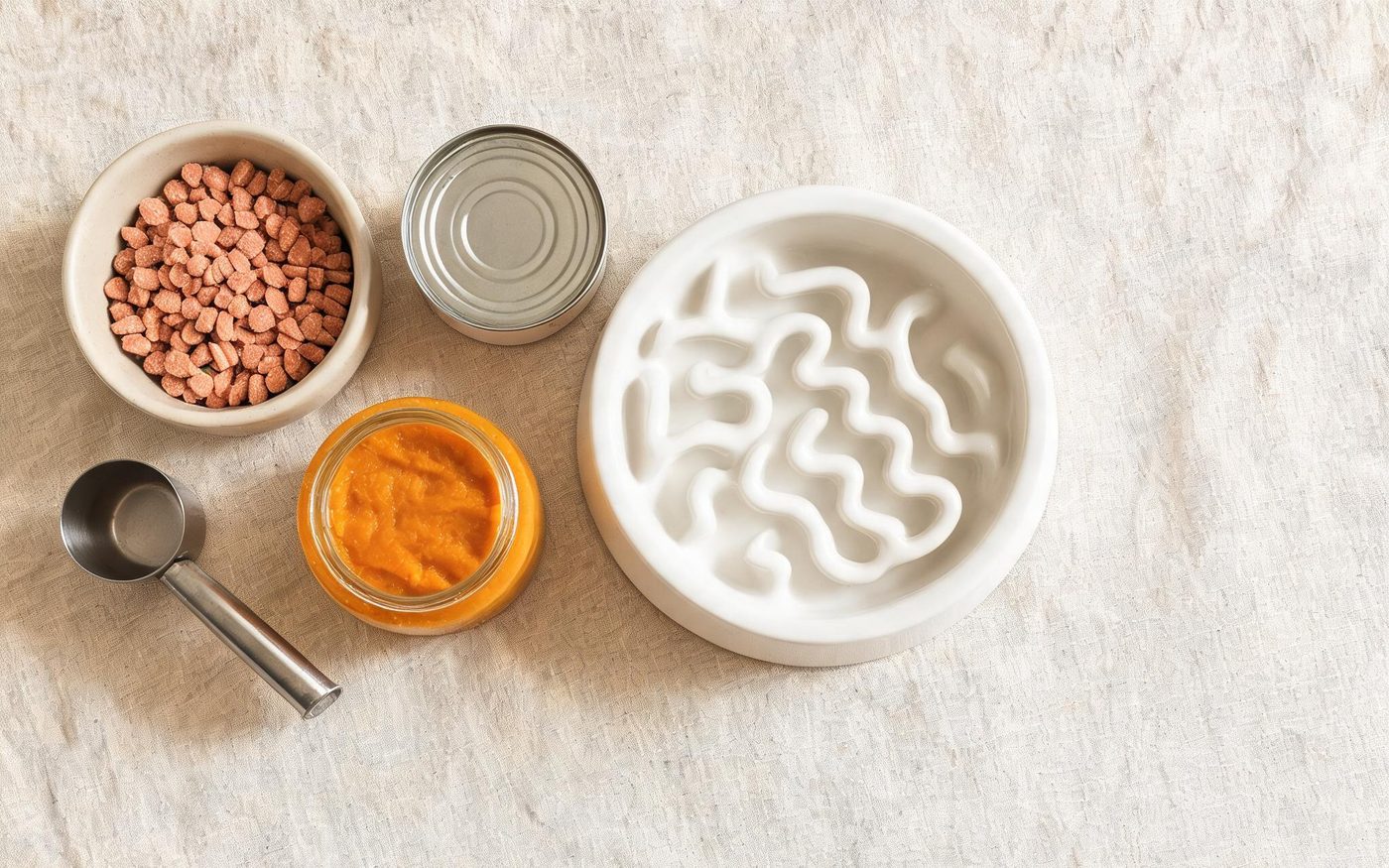
These are the six things we would put in our own cart for a Bichon with a delicate gut — five foods and feeding tools, plus one storage item people never think about until the kibble goes stale. We have described each one by what it is rather than by brand, because the category is what matters and stock changes constantly.
| What it is | Best For | Key Feature | Check on Amazon |
|---|---|---|---|
| Salmon-and-rice small-breed kibble for sensitive skin and stomach | The default starting point | Single named protein, moderate fat, small kibble | View on Amazon |
| Gentle wet food for flare-up days | When he will not eat kibble | High moisture, easy on a queasy gut | View on Amazon |
| Limited-ingredient single-protein kibble | Suspected food allergy | One protein, one carb, short ingredient list | View on Amazon |
| Slow-feeder bowl | Dogs who inhale their food | Maze pattern forces a slower, calmer meal | View on Amazon |
| Plain pumpkin puree | A soft stool that needs firming | One ingredient, gentle soluble fiber | View on Amazon |
| Airtight food storage container | Keeping kibble fresh to the last scoop | Snap-lock airtight seal, keeps fats from going stale | View on Amazon |
Our Pick, and the Honest Caveat
Our pick: the salmon-and-rice small-breed kibble is where we would start for most Bichons with a sensitive stomach, because it hits all four filters at once and salmon is a protein most dogs have never eaten — which makes it a useful first test even if you suspect a chicken problem.
The caveat is real, though: salmon is not magic, and some Bichons do better on lamb or turkey. If your dog has been on a chicken-based food for years and reacts to it, salmon is a genuinely new protein to him; if he has already been eating salmon, it is not new at all. That is exactly what the limited-ingredient single-protein kibble is for — the same simplified formula comes in several proteins, so pick one your Bichon has never eaten. Neither answer is the only right one; they are just the two most sensible places to begin.
And if the problem is speed rather than formula, no food on this list will fix it on its own — how to pick a slow feeder dog bowl for a small dog sorts the styles by job. That is what the slow-feeder bowl is for.
More Options Worth a Look
Two more things that earn their place in a sensitive-stomach household, and one link to the supplement side of this problem.
- A gentle wet food — a sensitive-stomach salmon wet formula is the thing we keep on the shelf for the days he turns his nose up at kibble. Extra moisture is genuinely helpful when a dog is not drinking much, and a dog who is refusing food is a dog you want eating something. Keep it to the same single protein you chose for the kibble if you can.
- Plain pumpkin puree — plain pumpkin puree is the closest thing to a universal gentle-fiber topper, and it now comes in single-serve pouches as well as cans. A spoonful on the food, not a bowl of it. Read the label: you want plain pumpkin, not pumpkin pie filling, which has sugar and spices in it.
- An airtight storage container — a sealed container that swallows a full bag sounds like an upsell and is not. The fats in kibble oxidize once the bag is open, and stale fat is both less appetizing and harder on a sensitive gut. A twelve-pound Bichon takes weeks to finish a bag, so this actually matters.
If you are already thinking about probiotics and digestive supplements, we covered those separately in our guide to Bichon Frise supplements — including the two that are worth the shelf space and the ones that are mostly marketing.
The Two-Week Test That Actually Works
This is the part that decides whether any of the above helps. The food matters; the method matters more.
Change one thing. Not three.
If you switch the food, add a probiotic, start a new treat, and move his dinner time all in the same week, you have run four experiments at once and you will not be able to name the winner. Pick the food. Leave everything else alone.
Transition over a full ten days
For a dog with a normal gut, seven days is fine. For a sensitive one, stretch it:
- Days 1–3: about a quarter new food, three quarters old.
- Days 4–6: half and half.
- Days 7–9: three quarters new, one quarter old.
- Day 10 onward: all new.
If the stool loosens partway through, back up one step and hold there a few extra days rather than pushing forward or quitting.
Keep a note on your phone
One line a day: stool score, appetite, any vomiting, any gas. This sounds fussy and takes ten seconds. It is also the only way you will know on day fourteen whether you are looking at improvement or just a good week — and if you do end up at the vet, a two-week log is genuinely useful information to hand over.
What two weeks can and cannot tell you
Be clear-eyed about this. Two weeks is enough to see whether the stool and the appetite are trending in the right direction. It is not enough to diagnose a food allergy. A true elimination trial — one protein, nothing else, not even flavored treats or toothpaste — takes eight to twelve weeks and should be run with your vet, because the whole point is to then reintroduce the suspect protein and watch what happens. Two weeks tells you whether to keep going. Eight weeks tells you why.
Write down what “better” means before you start
Decide up front what would count as a win: firm stool most days, no 2 a.m. gurgling, no grass-eating on walks, eating without hesitation. Otherwise, by day ten, you will have quietly moved the goalposts, which is exactly how people end up switching foods forever.
Foods and Habits That Make It Worse
A short list of the things that reliably undo a good food choice.
- Table scraps, and especially fat trimmings. This is the single most common cause of a sudden upset in a small dog, and it is the one that can escalate into pancreatitis.
- Treats nobody counts. Training treats, dental chews, rawhide, bully sticks and the crust of somebody’s toast all add up — and if you change the food while the treats stay the same, you have not run a clean test. During your two weeks, use his new kibble as the treat.
- Sudden food changes. Even a change to a “better” food is a shock if you do it overnight.
- Free-feeding. Leaving food down all day makes it impossible to know how much he ate or when, and it makes a portion problem invisible. Two measured meals is easier on the gut and easier to troubleshoot.
- An abrupt switch to a very high-fat or “ancestral” formula, even a well-made one. If you want to try it, treat it like any other change: slowly, and one variable at a time.
- Water you would not drink. Stale bowl water, pond water on walks, and shared public bowls can all do it.
When It Is Not the Food at All
Sensitive stomach is a description, not a diagnosis. Some of the things that look like a food problem are not one, and a few of them are urgent. Long-running stomach issues in a small breed are worth investigating properly rather than feeding around.
Call your vet the same day if you see blood in the stool, black tarry stool, repeated vomiting, a belly that looks bloated or feels hard and painful, or a dog who is lethargic and off his food entirely. In a puppy, diarrhea that lasts more than a day is also a same-day call, because small puppies dehydrate quickly.
Book an appointment rather than another bag of food if: the problem has been going on for weeks, your Bichon is losing weight, the stool is soft most days no matter what you feed, or you are seeing gut signs together with itching, ear trouble, or paw licking. That cluster points toward allergy, parasites, or something else a food change will not fix. Bring your two-week log with you.
Things a vet can rule out that a kibble bag cannot: intestinal parasites, giardia, a bacterial overgrowth, pancreatic issues, and — in this breed specifically — the kind of chronic inflammation that needs actual treatment rather than a gentler dinner.
What We Tried With Our Own Bichon
For the record, here is how it actually went for us, because “change one thing at a time” is much easier to write than to do.
Our first move was a grain-free formula, because that was what the internet said. Eight days in, nothing had changed except the invoice. Then we added a probiotic on top of the new food without waiting, which meant when things finally did improve we had no idea which change had done it. Then we went back to the original food and kept the probiotic, and the stools firmed up within about ten days.
So the honest version is this: for our dog, the probiotic did more than the food did — and we only found that out by accident, after making two changes at once and having to unwind one. The lesson was not “buy a probiotic.” The lesson was that the testing method, not the product, was what we had been getting wrong. If you take nothing else from this article, take the two-week log and the one-change rule, and you will get to your answer faster than we did.
Frequently Asked Questions
Do Bichon Frises have sensitive stomachs?
They are more prone to digestive sensitivity than the average breed, yes. Bichons are a small breed, so a single rich meal or an off treat is a large share of their daily intake, and the breed is also allergy-prone — and in dogs, food sensitivity often shows up as gut signs alongside skin signs like paw licking and face rubbing. That does not mean every Bichon has a delicate gut, but it does mean an upset stomach in this breed is common enough that finding the best food for Bichon Frise with a sensitive stomach is worth doing deliberately rather than by trial and error.
What foods should a Bichon Frise avoid?
Avoid high-fat table scraps and fat trimmings, which are the most common cause of a sudden upset and can trigger pancreatitis in a small dog. Avoid foods with several unnamed proteins such as “meat meal” or “poultry,” because if your dog reacts you cannot tell what he reacted to. Avoid overfeeding, which produces the same soft-stool picture as a bad food. And avoid treating grain-free as a cure — grain is not the usual problem, and the FDA has investigated a possible link between some grain-free diets and a heart condition in dogs.
How long does it take to switch a Bichon to a new food?
Take ten days rather than the usual seven. Mix about a quarter of the new food with three quarters of the old for the first three days, then half and half for three days, then three quarters new for three days, and go fully new on day ten. If the stool loosens partway through, step back one stage and hold there for a few extra days instead of pushing forward or abandoning the switch.
Is grain-free food better for a Bichon with a sensitive stomach?
Usually no. Grain is rarely the trigger, and grain-free formulas are often higher in fat and protein than the standard version of the same food, which is the opposite of what a sensitive gut wants. The FDA spent years investigating a possible association between some grain-free diets and dilated cardiomyopathy. If you genuinely suspect a grain, the way to find out is a supervised elimination trial, not a guess.
Should I give my Bichon a probiotic for a sensitive stomach?
A dog-specific probiotic is one of the few supplements with a sensible reason to exist, and it is often what finally settles a gut that has been disrupted by a food change or a course of antibiotics. Just do not start it in the same week as a new food — otherwise you will never know which one worked. Give it four to six weeks with nothing else changed, and note the result.
When should I stop guessing and call the vet?
Same day if you see blood or black tarry stool, repeated vomiting, a hard or painful belly, or a lethargic dog who will not eat. Book an appointment if the problem has lasted weeks, your Bichon is losing weight, or the gut trouble comes with itching, ear problems or paw licking. Bring a two-week log of stools and appetite with you — it turns a vague description into something a vet can actually work with.
Wrapping Up
Success here is not finding a miracle kibble. It is getting to a point where you know what your dog eats, you know it suits him, and you have stopped rotating bags in the hope that the next one is the answer. The best food for Bichon Frise with a sensitive stomach is the one you chose deliberately, introduced slowly, and tested with a note on your phone for two weeks.
Start with one protein and a moderate fat level — the salmon-and-rice small-breed kibble is our first stop — transition over ten days, and change nothing else. If speed is the issue rather than the formula, the slow-feeder bowl is a genuinely useful second purchase. And if two weeks of the same food, fed the same way, changes nothing at all, that is your signal it is time for a vet rather than a fourth brand.
If you are still building out the rest of his diet, our full guide to the best food for Bichon Frise covers the everyday feeding picture, and how much to feed a Bichon Frise handles the portion side, which is where a surprising number of “sensitive stomach” cases actually resolve.
Related Reading
- Best Food for Bichon Frise — the everyday feeding guide, including the small-breed metabolism problem.
- How Much to Feed a Bichon Frise — the portion math your kibble bag will not give you.
- Bichon Frise Itchy Skin — when the gut trouble and the scratching are the same problem.
- Bichon Frise Supplements — which ones earn their shelf space, and which do not.
Written by Penny Hartley, certified dog trainer (CCDT) and Bichon Frise owner of 9 years. Penny changed her Bichon’s food eleven times in one year before a vet pointed out that she had never once finished a proper transition. Last updated: October 2026.
This article was reviewed for accuracy by Dr. Laura Mendez, DVM. It is for educational purposes only and is not a substitute for professional veterinary advice. Always consult your veterinarian about your dog’s health, diet and any change in appetite or stool.
As an Amazon Associate, Love Bichon earns from qualifying purchases.