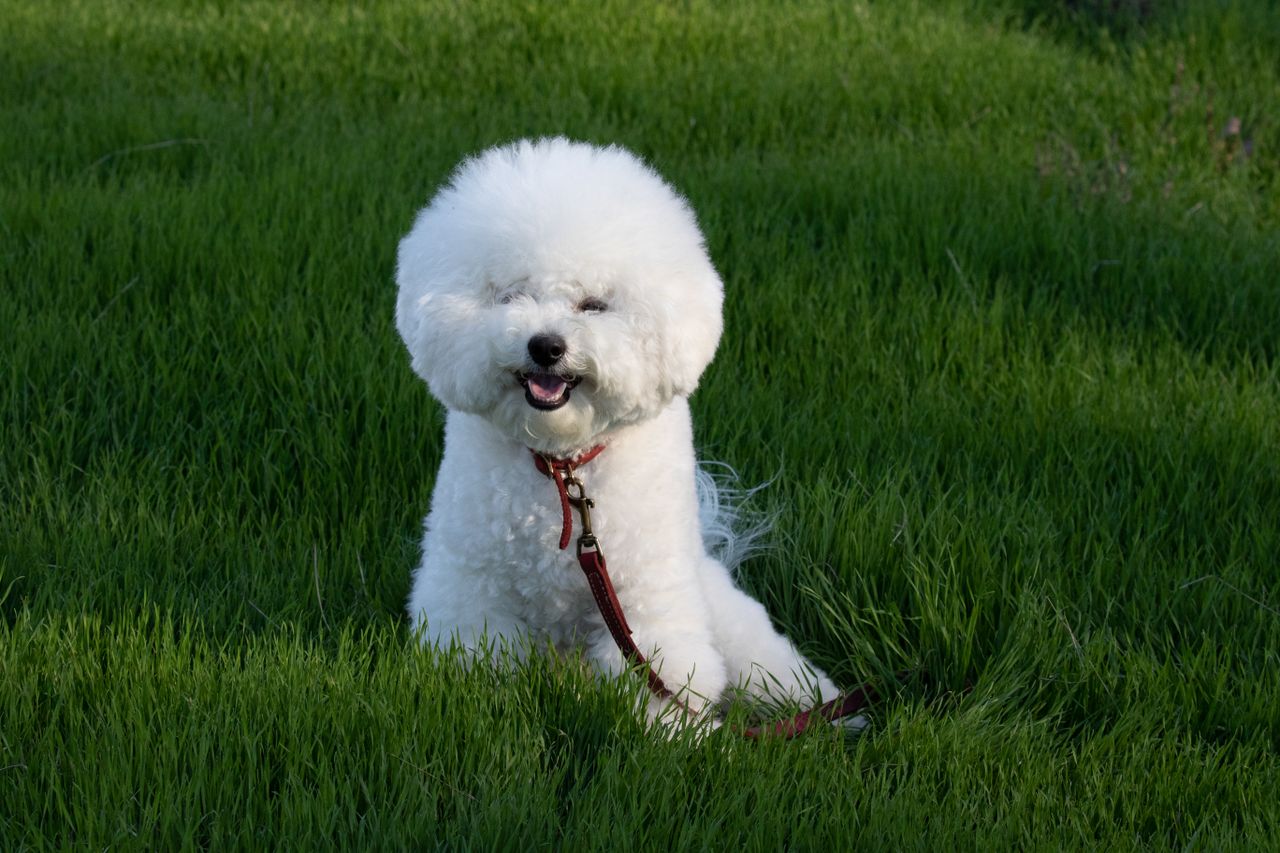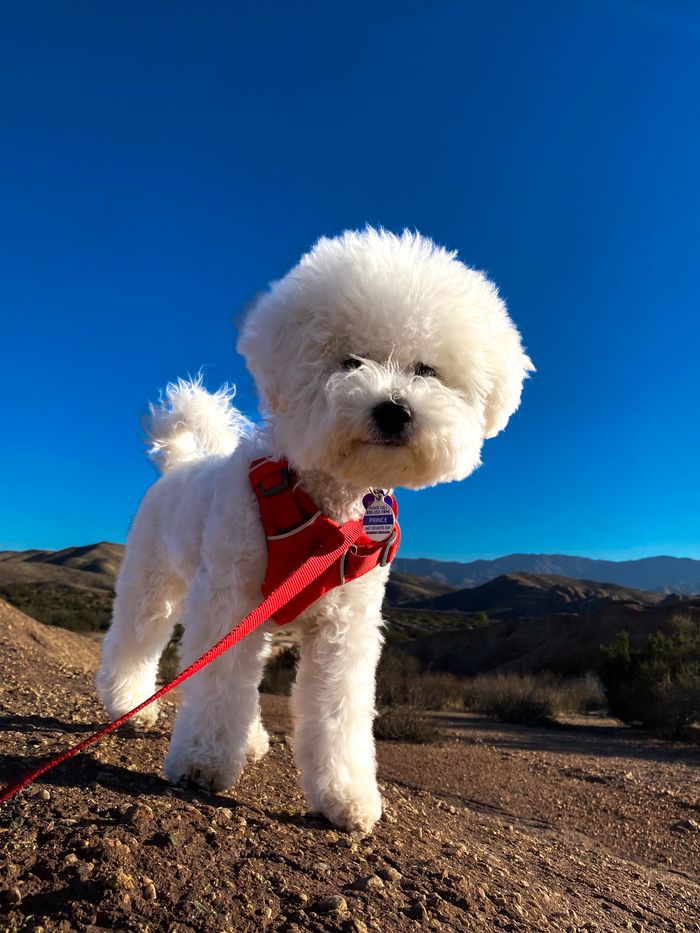
By the time you finish reading this, your Bichon will probably have done something adorable to distract you. Maybe it is a head tilt. Maybe it is a paw on your knee. Maybe it is that little bounce they do when they want your attention. And that is exactly the challenge of training a Bichon: they are so charming that we often let them get away with everything.
I know this because I have been there. My Bichon, Tofu, had me wrapped around his little paw from day one. He would look up at me with those big dark eyes, and suddenly, I was handing him a second treat, letting him sleep on the bed, and forgiving every chewed-up shoe. And while there is nothing wrong with spoiling your dog a little, I learned the hard way that without consistent training, that adorable cotton ball can quickly turn into a tiny, fluffy dictator.
So let us talk about training and behavior. Not as a chore, but as a way to build a deeper, more joyful relationship with your Bichon.
THE BICHON PERSONALITY: WHAT YOU ARE WORKING WITH
Before we get into specific training techniques, we need to understand who we are dealing with. The Bichon Frise is not a German Shepherd. They are not a Border Collie. They have their own unique personality traits that make training both wonderful and, at times, frustrating.
Bichons are incredibly intelligent. Do not let their cute appearance fool you. They are clever, observant, and excellent at reading human emotions. They know exactly when you are about to leave the house, when you are sad, and when you are holding a treat behind your back. This intelligence means they learn quickly, but it also means they can learn the wrong things just as fast. If you accidentally reward a bad behavior, they will remember it.
At the same time, Bichons are notoriously independent. They have a stubborn streak that can be maddening. You will ask them to sit, and they will look at you as if to say, “I know what you want, but what is in it for me?” This independence comes from their history as companion dogs who were valued for their charm and personality, not for their obedience.
They also have a very sensitive emotional core. Bichons bond deeply with their humans and are highly attuned to your mood and tone of voice. They do not respond well to harsh corrections, yelling, or punishment. If you raise your voice at them, they will shut down emotionally, and the training session is over. They need encouragement, patience, and plenty of positive reinforcement.
One more thing that makes training Bichons both a challenge and a joy: they love attention more than almost anything. Being the center of your world is their favorite thing. This means that attention, even negative attention, can be a powerful reward. If you scold them, they might not understand they did something wrong; they might just think, “Great, they are looking at me!” So, we have to be very deliberate about what behaviors we reinforce.
BEHAVIORAL CHALLENGES IN BICHONS: WHAT TO EXPECT
BICHON CHALLENGE NUMBER ONE: SEPARATION ANXIETY
This is the big one. If there is one behavioral challenge that defines the Bichon Frise, it is separation anxiety. I remember the first time I left Tofu alone for more than ten minutes. I came home to a neighbor waiting at my door, telling me my dog had been crying nonstop. I felt like the worst dog parent in the world.
Bichons are companion dogs. They were bred to be with people. Being left alone goes against every instinct they have. When you leave, they do not understand that you are coming back. Their world shrinks, and they panic. This panic manifests in barking, howling, destructive chewing, pacing, and even accidents in the house.
The good news is that separation anxiety is manageable, and there are specific steps you can take to help your Bichon feel more secure.
HOW TO TACKLE SEPARATION ANXIETY
First, start building independence from day one. I know it is tempting to hold your puppy constantly, but you need to teach them that being alone is okay. Set up a safe, cozy space for them, like a crate or a playpen with soft bedding, and let them spend short periods there while you are in the same room. Gradually increase the time they spend in their space while you move around the house.
Second, practice departures and arrivals. Make leaving and coming home as boring as possible. If you make a big fuss when you leave, your dog learns that leaving is a dramatic event. Similarly, if you come home and immediately shower them with excitement, they learn that your arrival is the highlight of their day, making your absence even harder. Instead, leave calmly and greet them calmly after a few minutes have passed.
Third, use desensitization. Start with very short departures. Put on your shoes, pick up your keys, and then sit back down. Do this repeatedly until your dog no longer gets excited when you reach for your keys. Then, take it one step further. Step out the front door for two seconds. Then five seconds. Then ten. Then thirty. If your dog stays calm, return and offer calm praise. The goal is to teach them that your absence is temporary and not a cause for alarm.
Fourth, leave distractions. A stuffed Kong toy, a puzzle toy, or a treat-dispensing ball can keep your Bichon occupied while you are away. The more time they spend focused on something enjoyable, the less time they spend worrying about your absence.
Fifth, exercise them thoroughly before you leave. A tired Bichon is a relaxed Bichon. A good walk or a vigorous play session before you head out can make a world of difference.
And finally, if your dog’s anxiety is severe, consult a professional trainer or your veterinarian. There are also calming aids, like pheromone diffusers and anxiety wraps, that can help. In some cases, medication may be necessary, and there is no shame in that. Your veterinarian will help you make the best decision.
BICHON CHALLENGE NUMBER TWO: EXCESSIVE BARKING
Bichons are vocal dogs. They bark to alert you, to greet you, to express excitement, and sometimes just to hear their own voice. While barking is a natural behavior, excessive barking can become a problem, especially in apartments or homes with close neighbors.
The key to managing barking is understanding what triggers it. Most Bichons bark at specific things: doorbells, visitors, other animals, or sounds outside. Once you identify the trigger, you can work on desensitizing your dog to it.
If your Bichon barks at the doorbell, record the sound and play it at a very low volume while rewarding your dog for staying quiet. Gradually increase the volume over several sessions. The goal is to change their emotional response from “OH NO, SOMEONE IS HERE” to “Oh, that sound means treats are coming.”
Never shout at your barking Bichon. Shouting back at them only sounds like you are joining in the barking party. Instead, try a calm, quiet “Thank you” or “Quiet,” and reward them the moment they pause, even if it is just to take a breath. With consistency, they will learn that quiet moments bring rewards.
BICHON CHALLENGE NUMBER THREE: STUBBORN POTTY TRAINING
Potty training a Bichon can test your patience. Their stubborn streak means they may decide that peeing outside is optional, especially in bad weather. My Tofu was perfectly happy to go outside on sunny days, but the moment it rained, he looked at me as if to say, “You cannot be serious.”
Here is a practical potty training routine that works for Bichons. Take your puppy out frequently, especially after waking up, after eating, and after playing. Establish a consistent routine and take them to the same spot every time. Reward heavily with treats and praise immediately after they eliminate outside, not when you come back inside. The reward must be timed perfectly to help them understand exactly what you are praising.
If you catch your Bichon eliminating indoors, interrupt them with a gentle “Oops” and immediately take them outside. Do not scold or punish them. Punishment only teaches them that you are scary and that they should eliminate in secret. Clean all accidents thoroughly with an enzymatic cleaner to remove the scent completely. Dogs are drawn to return to areas that still smell like urine.
Be patient and consistent. Accidents will happen, but with a good routine, your Bichon will eventually figure out that outside is the place to go.
BICHON CHALLENGE NUMBER FOUR: JUMPING UP
Bichons are small but enthusiastic, and they love to jump up to greet people. While this may seem adorable, it can be problematic, especially with children or elderly individuals. Teaching your Bichon to greet calmly is an important part of their training.
The best approach to discourage jumping is to ignore the behavior completely. Turn your back and do not give your Bichon any attention until they have all four paws on the ground. This approach works because Bichons value attention above almost anything else. The moment their paws land on the floor, you can praise and reward them. Consistency among all family members and guests is absolutely essential.
BICHON CHALLENGE NUMBER FIVE: CHEWING AND DESTRUCTIVE BEHAVIOR
Chewing is a natural behavior for dogs, especially puppies. It helps relieve teething discomfort, boredom, and anxiety. However, when your Bichon prefers your furniture over their toys, it becomes a problem. The solution is to redirect this instinct toward appropriate items.
Provide a variety of safe chew toys. Keep these toys accessible at all times. When you catch them chewing something inappropriate, interrupt them with a calm “Ah ah” and replace the item with one of their toys. Praise them when they engage with the correct item. This redirection teaches them what is acceptable to chew.
Prevention is also important. Puppy-proof your home by keeping shoes, remote controls, and other tempting items out of reach. If your Bichon continues destructive behavior despite having appropriate chew toys, the issue may be boredom or separation anxiety, and you will need to address those root causes.
ESSENTIAL TRAINING COMMANDS FOR YOUR BICHON
You do not need to teach your Bichon a hundred different tricks. In fact, focusing on a few essential commands will give you a well-behaved, happy dog who can navigate the world safely. These commands are the foundation of good behavior.
THE SIT COMMAND
This is the easiest command to teach and the most useful. Hold a treat near your Bichon’s nose. Slowly move the treat upward and slightly backward over their head. As they follow the treat with their nose, their bottom will naturally lower to the ground. As soon as they sit, mark the behavior with a cheerful “Yes!” and give them the treat. Practice this in short sessions. They will get it quickly.
THE STAY COMMAND
Once your Bichon has mastered sitting, you can build on it by teaching them to stay. Ask for a sit. Then, with your palm facing them like a stop sign, say “Stay” in a calm, clear voice. Take one step back. If they remain seated, return, praise them, and give them a treat. If they move, simply say “Oops” and try again with a smaller step. Gradually increase the distance and duration, but always keep it manageable for them. If they fail, it usually means you moved too fast. Go back to an easier step and build from there.
THE COME COMMAND
This command could save your Bichon’s life. Start in a quiet, enclosed space. Crouch down, open your arms wide, and say “Come” in an excited, inviting tone. Reward generously when they reach you. Never call your dog to come for something unpleasant, like a bath or a nail trim. If you only call them for positive things, they will always want to respond.
THE LEAVE IT COMMAND
This command is essential for preventing your Bichon from picking up dangerous items off the ground. Start by placing a low-value treat on the floor and covering it with your hand. When your dog sniffs or paws at your hand, ignore them. The moment they look away or back up, say “Take it” and reward them with a higher-value treat from your other hand. You are teaching them that leaving something alone leads to something better. As they improve, you can uncover the treat and increase the difficulty.
THE DOWN COMMAND
Teaching your Bichon to lie down is useful for calming them in exciting situations. Hold a treat in your hand, let them see it, then slowly lower your hand to the floor in front of them. As they follow the treat, they will naturally lower their body. Once they are fully lying down, mark the behavior with “Yes!” and give them the treat. If they do not lie down, gently guide them into the position while using the command.
SOCIALIZATION: THE GIFT THAT KEEPS GIVING
If there is one thing I wish I had done more of with Tofu, it is socialization. I took him out, sure, but I did not expose him to enough different dogs and people during his critical development period. And now, well, let us just say he has opinions about certain dogs.
The socialization window closes around sixteen weeks. Every new person, dog, environment, sight, and sound your Bichon encounters during this period helps shape their view of the world. Puppies are naturally curious during this time, and it is much easier to build positive associations than to undo fears later.
Take your puppy to different places. Let them see children, hear traffic, feel different ground surfaces. Introduce them to a variety of friendly, vaccinated dogs. The goal is not to force interactions, but to let your puppy observe and have positive experiences.
If your adult Bichon is fearful or reactive, it is not too late. Socialization for adult dogs takes longer and requires more patience. Expose them to new things gradually and at a distance. Pair every new experience with high-value treats so they learn that “new” equals “good.” If your dog shows fear, back off and proceed more slowly.
UNDERSTANDING BICHON BODY LANGUAGE
Building a deeper bond with your Bichon begins with learning to understand their communication. Dogs communicate primarily through body language. Understanding your Bichon’s signals will help you better interpret their feelings and respond appropriately.
The happy Bichon: A happy Bichon has a relaxed, open mouth, soft, round eyes, and a loosely wagging tail. Their ears are relaxed, and their body is wiggly, like a happy noodle. When you see these signs, you know your dog is feeling safe and joyful.
The anxious Bichon: When anxious, a Bichon may show subtle signs like yawning when not tired, lip-licking in the absence of food, panting without exertion, and a tucked tail. These are early signals of discomfort. If you see these signs, give your dog space and do not push them further into an uncomfortable situation.
The scared Bichon: When a Bichon feels scared, their body becomes low to the ground. They may avoid eye contact, pin their ears back, and tuck their tail completely between their legs. They might shake or freeze in place. Scared dogs are unpredictable and should never be forced to interact.
The aggressive Bichon: A truly aggressive or defensive Bichon will raise the hair on their back, show their teeth, and emit a low growl. Some may snarl and lift their lip. If your dog shows these signs, stop whatever is happening immediately and remove them from the situation. Do not try to handle or soothe them in that moment.
A Bichon that is staring intently at you with a tense body and a high, stiff wagging tail is usually alert or focused. A playful Bichon offers a play bow with their chest to the ground and rear in the air. That posture is an invitation to play.
THE ROLE OF CRATE TRAINING
Some people think crate training is cruel. I used to think so too. But I quickly learned that a properly introduced crate is not a prison, it is a den. It is a safe space where your Bichon can relax, sleep, and feel secure. Crates are also incredibly helpful for potty training. Most dogs will not soil their sleeping area, so a correctly sized crate can help them learn to hold it until they are let outside.
Always give your dog positive associations with the crate by placing treats and toys inside. Never use the crate as punishment. The goal is for your Bichon to feel comfortable and relaxed inside. Start by leaving the door open, letting your dog explore the crate on their own, and gradually work up to closing the door for short periods while you are still present. With time, the crate can become your dog’s favorite place.
WHEN TO SEEK PROFESSIONAL HELP
There is absolutely no shame in asking for professional help. In fact, it is one of the best decisions you can make for your dog. Consider seeking professional guidance if your dog displays aggression toward people or other animals, or if their separation anxiety is so severe that it causes self-harm. Professional help is also wise if you are struggling to make progress despite consistent effort, or if your dog’s behavior is impacting your quality of life.
A qualified positive reinforcement trainer can observe your dog, identify patterns you might be missing, and create a customized training plan. They can also support you in addressing the more challenging behaviors. Investing in professional training is an investment in your relationship with your dog.
BRINGING IT ALL TOGETHER
If you take away one thing from this guide, let it be this: your Bichon is not trying to make your life difficult. They are just trying to understand you, the world, and their place in it. Training is not about asserting dominance. It is about building trust and creating a language that you both share.
When you are frustrated, remember that your dog loves you more than anything in the world. They are not giving you a hard time; they are having a hard time. Your patience, consistency, and kindness will make all the difference.
My Tofu is not a perfectly trained dog. He still barks at the mailman. He still has opinions about certain dogs. He still tries to convince me that he has never been fed a day in his life. But he knows that I love him, that I am his safe place, and that when things feel scary, I am there.
And really, is that not what we all want? To be understood? To feel safe? To know that someone is on our side?
That is what training is, in the end. It is not about control. It is about connection. So be patient with yourself and your Bichon. Celebrate the small wins. And when things go sideways, just take a breath, start over, and give that fluffy belly a gentle rub. You have got this.