Best Tear Stain Remover for a Bichon Frise: The Four Jobs Nobody Tells You About
Say this out loud in a pet store and watch the aisle blur: “I just need a tear stain remover for a Bichon Frise.” I did precisely that for the better part of two years, and I came home with something different every time — wipes, then a powder, then a blueberry shampoo, then a tub of chews — while Mochi’s face looked exactly the same. The products were never the problem. The problem is that “tear stain remover” is not one job. It is four, they work on completely different parts of the problem, and which one you need depends on something you can check in about ten seconds.
If you want the short version before the reasoning: for most white-faced Bichons, the single highest-value purchase is a tub of presoaked eye wipes you leave somewhere you actually sit. Angels’ Eyes Tear Stain Wipes is the tub that ended up on our coffee table. Everything below explains why that comes first, and what — if anything — you add after it.
What’s in here:
- Why the stain keeps coming back
- The four jobs, and which one you actually need
- How to choose a tear stain remover for a Bichon Frise
- The five we’d actually buy
- What two weeks of actually doing this looks like
- The inside-out question: diet, water, supplements
- Three things I got wrong
- When it isn’t a staining problem at all
- FAQ
Why the Stain Keeps Coming Back
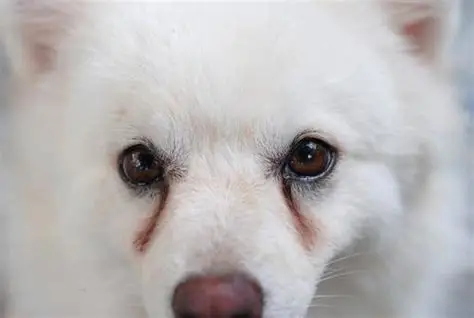
Start with the part that makes everything else make sense: the brown is not dirt. It is a chemical reaction, and it happens on the hair, not on the skin.
Dog tears contain porphyrin — a pigment that is essentially colourless while it is wet. When it sits on white fur and dries, it oxidizes, and the oxidized form is the rusty red-brown you are looking at. That one fact explains the single most frustrating thing about tear stains: once the pigment has bonded to the hair shaft, wiping harder does nothing. You are not removing a mess. You are trying to reverse a stain that has already set, and the hair it set into is going to grow out, not wash clean.
So a product that adds moisture — a wet wipe, a rinse, a shampoo you didn’t rinse well — is feeding the reaction, at least until the stain is lifted. A product that removes moisture is starving it. Two opposite jobs, both sold in the same aisle, neither one labelled clearly.
Why Bichons get the worst of it
Three breed facts stack against you. Bichons have large, round, fairly prominent eyes set in shallow sockets, so tears spill over the lower lid instead of draining neatly down the tear duct. The coat grows right up to the lash line. And that hair is dense and absorbent, which means it acts less like a fringe and more like a candle wick, pulling moisture sideways onto the muzzle and holding it there. A drop of tear that would dry harmlessly on a short-coated dog gets carried across half the face and parked on white fur for hours.
Why “wipe more often” eventually plateaus
Because wiping treats the symptom. If your Bichon is producing extra tears in the first place, you are bailing out a boat with the plug still in. Excess tearing — the clinical word is epiphora — has real causes: allergies, an ear infection on the same side, eyelashes or facial hair rubbing the eyeball, a blocked tear duct, or simply the anatomy the breed was born with. You cannot out-wipe a blocked duct. That is why the fourth job below is not a product at all, and why the section near the end about the vet matters more than any link on this page.
The Four Jobs, and Which One You Actually Need
Every tear stain product on the shelf is doing one of four things. Read the list and be honest about which one your dog’s face is asking for.
Job 1 — Clean what is there today
Removing fresh tears before the porphyrin has time to oxidize. This is the daily job, and it is the one that actually prevents the stain rather than treating it. If you do only one thing, do this one, twice a day, at the same two moments every day.
Job 2 — Lift what has already bonded
Getting the set-in colour out of hair that is already stained. This is the part people buy first and should usually buy second, because it is a repair job. Two forms do it: a dry powder that absorbs moisture and lightens the area, and a tearless facial shampoo that lifts the pigment on wash day. Neither is a substitute for Job 1.
Job 3 — Change what the tears are made of
Working from the inside, on the assumption that the tear chemistry itself is the problem. Diet, water, and oral supplements live here. This is the job with the thinnest evidence behind it, and I will be straight with you about that later rather than pretending a chew is a cure.
Job 4 — Get the hair out of the way
The mechanical job, and the one almost nobody buys for. If the coat around the eye is long enough to reach the lash line, it will wick tears onto the face no matter how diligent you are with Job 1. A fine-toothed comb and a careful trim do more for a chronic stainer than any bottle.
How to Choose a Tear Stain Remover for a Bichon Frise
Four filters. They take about five minutes and they will save you from buying the same wrong thing twice.
- Match the product to the age of the stain. Stain appeared today, or appears every day? You need Job 1 — wipes. Stain has been sitting there for weeks and the fur is genuinely brown? You need Job 2 as well. Buying a powder for a fresh tear is like polishing a scratch that is still being made.
- Read the eye before you read the label. Red, squinting, weepy, or producing green or yellow discharge? Close the tab and call your vet. No product on this page fixes an infected or injured eye, and some of them will make it worse.
- Look at the physical form, not the marketing name. “Tear stain remover” describes wipes, rinses, powders, shampoos, and chews. They are not interchangeable. Decide which of the four jobs you are shopping for, then filter by form: a wet pad cleans, a dry powder dries, a shampoo washes, a chew is swallowed, and a comb scrapes.
- Nothing near the eye that you would not put near your own. No human whitening shampoo — the brightening agents in those are far too aggressive for the skin around an eye. No boric acid, no contact lens solution, no undiluted essential oils, no home-mixed peroxide. A dog-formulated tearless facial wash is a different thing entirely, and that distinction is on the label if you look for it.
One practical note that has nothing to do with chemistry: buy the format you will actually use. A tub of a hundred presoaked pads that lives next to the couch beats a dropper bottle that lives in a cupboard you never open. The best tear stain remover for a Bichon Frise is the one that gets used on a Tuesday when you are tired.
The Five We’d Actually Buy
Five products covering the four jobs, in the order I would buy them. These are the ones currently in our house, not a list assembled from spec sheets.
1. A tub of presoaked wipes — Job 1, and the one that matters most
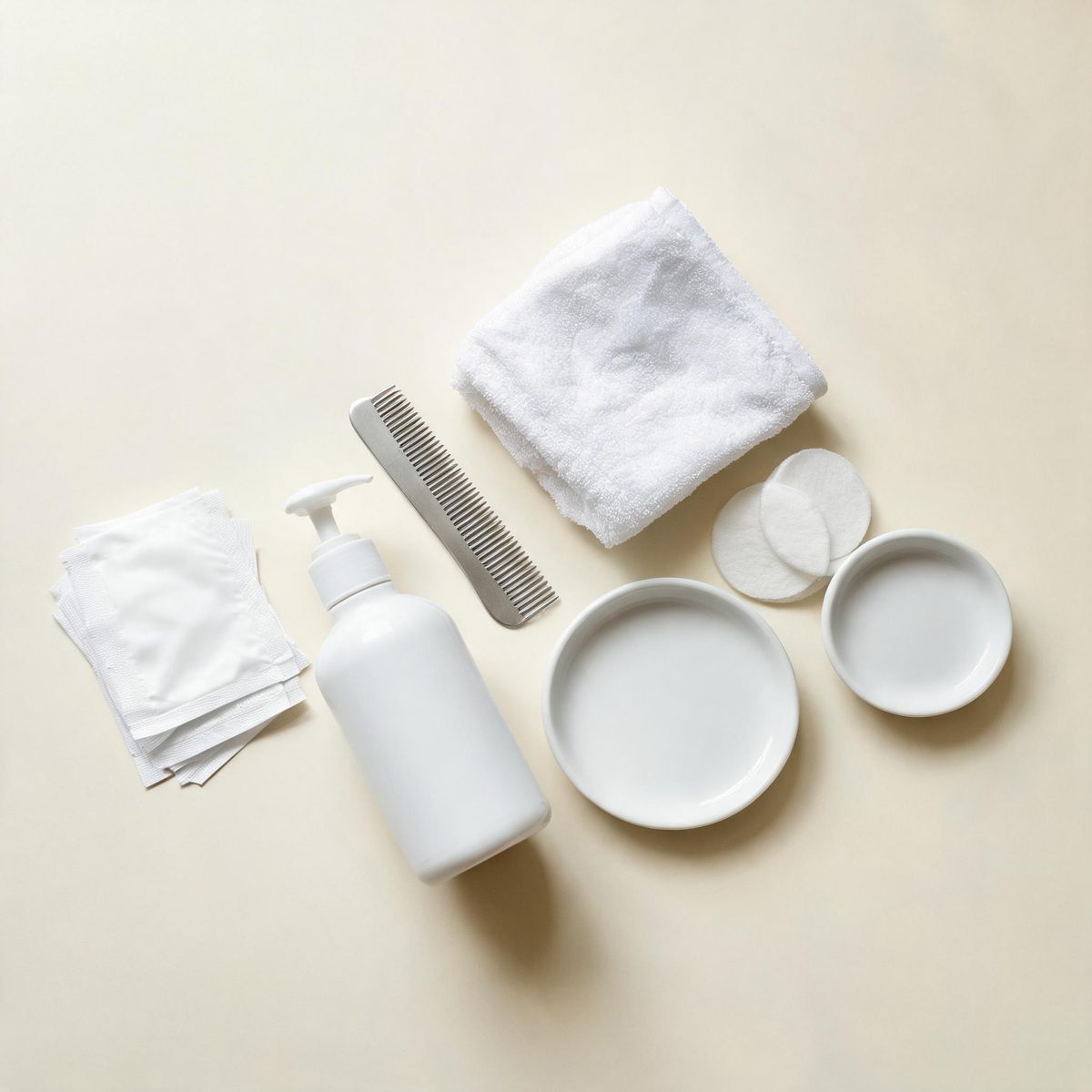
These are textured pads already soaked in a gentle cleaning solution, a hundred to a tub, which is roughly two months at twice a day. That is the whole pitch: no bottle to find, no cotton balls to lose, nothing to dilute at eleven at night.
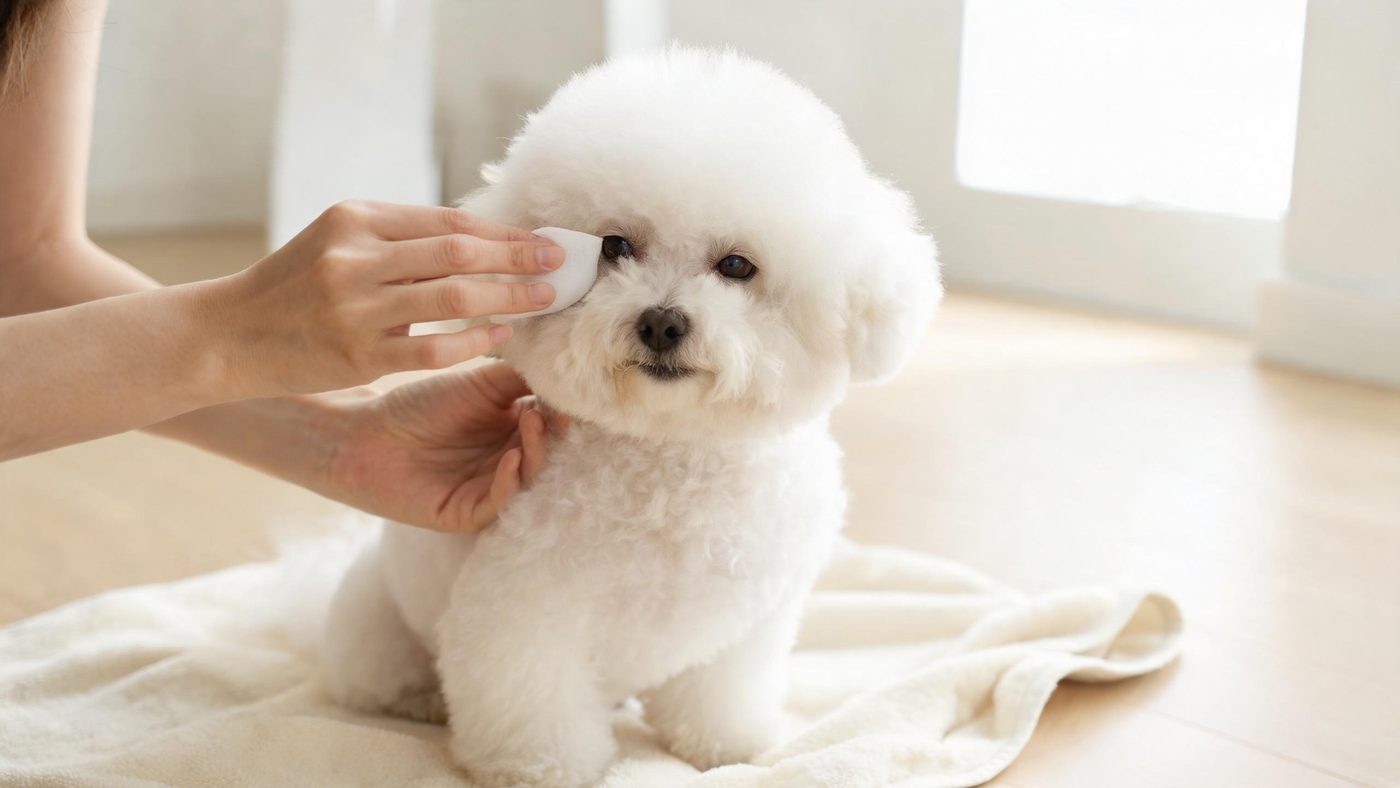
You lift the fur away from the eye, wipe outward along the fur rather than into the eye, use a fresh pad per eye so you are never moving bacteria from one side to the other, and you are done in twenty seconds. Because they are already wet, they clean a fresh tear without you having to scrub at a stain that has not formed yet. This is the product that actually interrupts the loop, and if you buy nothing else from this page, buy this. See the presoaked tear stain wipes on Amazon.
2. A stain powder — Job 2, for colour that has already set in
This is the counterintuitive one, so read it twice. A tear stain powder is not a cleaner. It is a drier. You brush a fine powder into the damp fur around the eye after cleaning, it absorbs the moisture sitting there, and it keeps the area dry enough that the porphyrin stops oxidizing.
Eye Envy’s version is the one that has been around forever for a reason: applied to a clean, dry-ish face it visibly lightens set-in staining over a couple of weeks, and it comes with a small applicator brush so you are not dumping powder into an eye. It will not remove a stain that is being renewed every hour, which is why it comes second. See the tear stain remover powder on Amazon.
3. A tearless facial shampoo — Job 2, on wash day
Different tool, same job. A facial shampoo formulated to be tearless gets used in the bath, on the muzzle and around the eye area, and lifts the pigment that has worked its way into the coat. TropiClean’s blueberry facial is the one most groomers seem to reach for — it is tearless, it is made for faces rather than bodies, and it does not leave the coat feeling stripped.
Two rules: use a very small amount, and rinse it properly. A shampoo residue left near the eye is moisture sitting exactly where you do not want it, which is the opposite of the point. See the tearless facial shampoo on Amazon.
4. Soft chews with lutein — Job 3, and I’ll be honest about this one
This is the pick I would put last, and I would rather say why than sell it to you. The idea behind an oral supplement is that you change the tear chemistry itself, so less porphyrin comes out in the first place. It is a plausible idea. The published evidence behind it is genuinely thin, and anyone who tells you a chew is a guaranteed fix is guessing.
NaturVet’s formula is the most established of the bunch — lutein plus cranberry, marshmallow root and Oregon grape root, in a soft chew most dogs take as a treat. If you want to test the theory, give it four to six weeks, change nothing else at the same time, and take a photo on day one so you are comparing evidence rather than impressions. If nothing has moved in six weeks, stop buying it. See the lutein tear stain chews on Amazon.
5. A round-tip eye comb — Job 4, the mechanical fix nobody buys
Here is the thing no bottle will do for you: when the hair around the eye gets long enough to touch the lash line, it soaks up tears and carries them across the face. It also collects dried crust, and a wet wipe smears that crust back onto the skin instead of removing it.
A fine-toothed facial comb with rounded tips lifts the dried gunk out of the coat in a couple of strokes, and keeping that fur combed down and slightly trimmed keeps it from wicking in the first place. The rounded tips are the part that matters — a standard flea comb has sharp-cut teeth and will scratch skin this close to an eye. Comb gently, in the direction the hair grows, and stop if your Bichon pulls away. See the round-tip eye comb on Amazon.
Where the five land, side by side
| Tool | Job it does | Best for | What to look for | Check on Amazon |
|---|---|---|---|---|
| Presoaked eye wipes | Cleans fresh tears before they oxidize | Every dog, twice a day | Textured pads, already soaked, hundreds per tub | View on Amazon |
| Stain remover powder | Absorbs moisture, lightens set-in colour | Fur that is already brown | Fine powder plus an applicator brush | View on Amazon |
| Tearless facial shampoo | Lifts pigment from the coat on wash day | Bath time, muzzle and eye area | Labelled tearless and formulated for faces | View on Amazon |
| Lutein soft chews | Works on tear chemistry from the inside | A four-to-six week experiment | Named ingredients rather than a vague blend | View on Amazon |
| Round-tip eye comb | Removes crust, stops hair wicking tears | Long or crusty eye-area coat | Fine stainless teeth with rounded tips | View on Amazon |
If you buy one thing: the wipes, because they are the only item here that stops the stain from forming rather than treating it afterwards. The powder is the second buy and it is a genuine upgrade once the fur is already coloured — just remember it is a drier, not a cleaner.
The comb is the least glamorous item here, and it quietly fixes the cause nobody talks about. The facial shampoo is a bath-day tool and the chews are a coin flip you can stop paying for after six weeks. Skip the chews entirely if you are not going to take the day-one photo.
What Two Weeks of Actually Doing This Looks Like
Products without a schedule are just clutter. This is the sequence that finally worked in our house, and the order matters more than the brand names.
- Days 1–3 — wipes only, twice a day. Morning and last thing at night, one fresh pad per eye, wiping outward along the fur. Do not touch the powder yet. You are establishing the habit and giving the current staining a baseline.
- Day 3 — photograph the face. Straight on, in daylight, same distance each time. You will not be able to see two weeks of change without it, and this is the single most useful thing on this list.
- Days 3–4 — comb and trim. Comb the dried crust out of the eye-area coat with the round-tip comb, working outward. If the hair is long enough to reach the lash line, take a few millimetres off with round-tipped scissors — or ask your groomer to, and specifically tell them why. This step is what buys you the plateau break.
- Day 5 — bath, with the facial shampoo. Small amount, eye area and muzzle, rinse twice as long as feels necessary, dry the face thoroughly. Damp fur is a stain waiting to happen.
- Days 6–14 — wipes twice daily, powder on the damp patches. After the evening wipe, once the fur is basically dry, brush a little powder into the areas that stay damp. You are not cleaning now; you are keeping the surface dry between cleanings.
- Day 14 — compare the photos. If the staining is lighter, keep going; the set-in colour fades as the hair grows out, so expect weeks rather than days. If nothing has changed at all, the tears are being produced faster than you can manage them, and that is a conversation for your vet rather than another product.
The Inside-Out Question: Diet, Water, Supplements
Search long enough and you will find a hundred people swearing that switching food cured their dog’s tear stains. Some of them are right, and it is worth understanding when.
Food. The one dietary cause with real evidence behind it is an allergy or sensitivity. If the staining arrived alongside itchy paws, a red belly, recurring ear trouble, or a lot of face rubbing, the tears may be an allergy symptom rather than a stain problem, and changing what your Bichon eats can genuinely help — under a vet’s direction, with a proper elimination trial rather than a random switch.
If your dog is otherwise perfectly comfortable, changing food is unlikely to change the face. Our guide to Bichon itchy skin walks through how to tell those two situations apart, and the Bichon Frise food guide covers what to look for if you do switch.
Water. The claim is that hard or high-mineral tap water makes staining worse, and that filtered water helps. The evidence is anecdotal, but the experiment costs almost nothing and takes two weeks, so it is a reasonable thing to try alongside everything else. Be honest with yourself about the result — if you changed the water, the wipes, and the food in the same week, you learned nothing.
Supplements. Covered above, and worth repeating in one line: plausible mechanism, thin evidence, four to six weeks, photo or it didn’t happen.
What not to do. Do not add human foods to “balance” a diet — onion, garlic, grapes, raisins and xylitol are all genuinely dangerous, and a home-cooked diet for a small breed is easy to get wrong. And do not chase the stain with antibiotics from a friend’s leftover supply. If the discharge is infected, that is your vet’s call and a culture’s job.
Three Things I Got Wrong
I bought a remover when I needed a drier
My first bottle made the fur wetter. It sat there, holding moisture against the coat exactly where the reaction needed water to keep going. I spent a month cleaning a stain and feeding it at the same time. If the fur around the eye stays damp for hours after you have finished, you have bought the wrong half of the problem.
I let the eye-area coat grow because it was adorable
It was adorable. It was also a wick. Mochi’s face got visibly better the week our groomer started keeping the fur just above the eyes shorter, and I had spent two years blaming products for something a pair of scissors was always going to fix.
I treated the stain instead of reading the eye
For the first year I never once looked at why the tears were there. When our vet checked Mochi’s ears for an unrelated reason and found a low-grade infection on one side, the staining on that side improved after treatment. Same dog, same wipes, different tear production. If your Bichon stains more on one side than the other, that asymmetry is a clue, not a coincidence.
When It Isn’t a Staining Problem at All
Tear stains are cosmetic. Excess tearing is sometimes not. Book a visit rather than a basket if you see any of these:
- Green or yellow discharge, or discharge that is thick rather than watery — that is infection, and wipes will not touch it.
- Squinting, holding the eye closed, or pawing at the face — pain signals, and dogs are good at hiding them.
- A red, cloudy, or swollen eye, or one that looks different from the other.
- Staining on one side only, especially if it appeared suddenly — that pattern points at something local rather than at tear chemistry.
- A blocked tear duct, entropion, or lashes rubbing the eyeball — all things a vet can actually diagnose, and all of them cause tears no product will stop.
- Any change in the eye itself, however small. Eyes are not a wait-and-see organ.
It also helps to know what the ceiling looks like. A Bichon with pale fur and a genetic tendency to tear may always have a faint shadow around the eyes, even when everything is being done right. The goal is a comfortable eye and a face that is not getting worse — not a permanently dry, perfectly white muzzle. Chasing the last ten percent with harsher and harsher products is how people end up irritating an eye that was fine.
Frequently Asked Questions
Why does my Bichon Frise have tear stains?
Tears contain porphyrin, a pigment that is colourless while wet and turns rusty red-brown as it dries and oxidizes on white fur. Bichons get more of it than most breeds because their large, prominent eyes spill tears onto the face, and the dense coat around the eye soaks those tears up and holds them there. The staining itself is cosmetic, but the excess tearing behind it can have a cause worth checking — allergies, an ear infection, eyelashes rubbing the eye, or a blocked tear duct.
What do groomers use to remove tear stains?
Groomers overwhelmingly reach for two things: a tearless facial shampoo on wash day, and a fine-toothed comb to lift dried crust out of the eye-area coat instead of smearing it back onto the skin. Most also keep the fur just above the eyes shorter, because long face hair wicks tears across the muzzle. Grooming addresses the stain that has already set; it does not stop the tears, which is why the daily wiping at home is still the part that matters most.
What can I feed my dog to stop tear stains?
There is no food that reliably removes tear stains, and any article that promises one is guessing. The exception is a genuine allergy: if the staining came with itchy skin, ear trouble, or a lot of face rubbing, then food may be the underlying cause and a proper elimination trial under veterinary guidance can help. Otherwise, dietary changes mostly rearrange the same tears. If you want to test a supplement, give it four to six weeks with nothing else changed, and photograph the face on day one so you are judging evidence rather than hope.
How do I get dried tear stains out of white fur?
Patience and two different products, in that order. The colour has bonded to the hair shaft, so it lifts gradually as that hair grows out — think weeks, not days. Clean the area twice daily with presoaked pads so no new pigment is being laid down, keep the fur dry afterwards with a light dusting of stain powder, and use a tearless facial shampoo on wash day to lift what is already there. Anything advertised as an instant fix for set-in staining is either very aggressive or very optimistic, and near an eye, aggressive is the wrong trade.
Are tear stains a sign my Bichon is sick?
Usually not — the majority of tear staining is cosmetic and simply breed anatomy. It becomes a health question when it changes: sudden staining on one side only, thick green or yellow discharge, squinting, redness, swelling, or your dog pawing at the face all point at something that needs a vet rather than a wipe. A blocked tear duct, entropion and infected ears are all common, all treatable, and none of them will improve with a stain remover.
Wrapping Up
The right tear stain remover for a Bichon Frise is not the fanciest bottle or the one with the loudest claims — it is the one that matches the job your dog’s face actually needs. Clean the fresh tears twice a day, keep the fur dry so the pigment stops oxidizing, wash and comb on a schedule, and keep the hair above the eyes short enough that it cannot wick. Do those four things and most of the brown fades as the coat grows out. Then read the eye itself, because the tears have a reason, and that reason is the only part of this that a vet can fix.
If you want the wider picture of what is happening on that face, our Ultimate Bichon Frise Tear Stain Guide goes deeper on causes, and the daily wipe-down routine covers how to make the twice-a-day habit survive a busy week.
Related Reading
- The Ultimate Bichon Frise Tear Stain Guide — the full picture of why the staining happens in the first place.
- Best Shampoo for Bichon Frise — keeping a white coat white without stripping the skin.
- How Often Should You Bathe a Bichon Frise? — the drying matters as much as the washing.
Written by Penny Hartley, certified dog trainer (CCDT) and Bichon Frise owner of 9 years. Penny has bought four different “tear stain removers” for one twelve-pound dog, and only two of them were the right job.
This article was reviewed for accuracy by Dr. Laura Mendez, DVM. It is for educational purposes only and is not a substitute for professional veterinary advice. Always consult your veterinarian about your dog’s health.
As an Amazon Associate, Love Bichon earns from qualifying purchases.