Bichon Frise Clippers: Why the Quiet Ones Win (and How to Pick Yours)
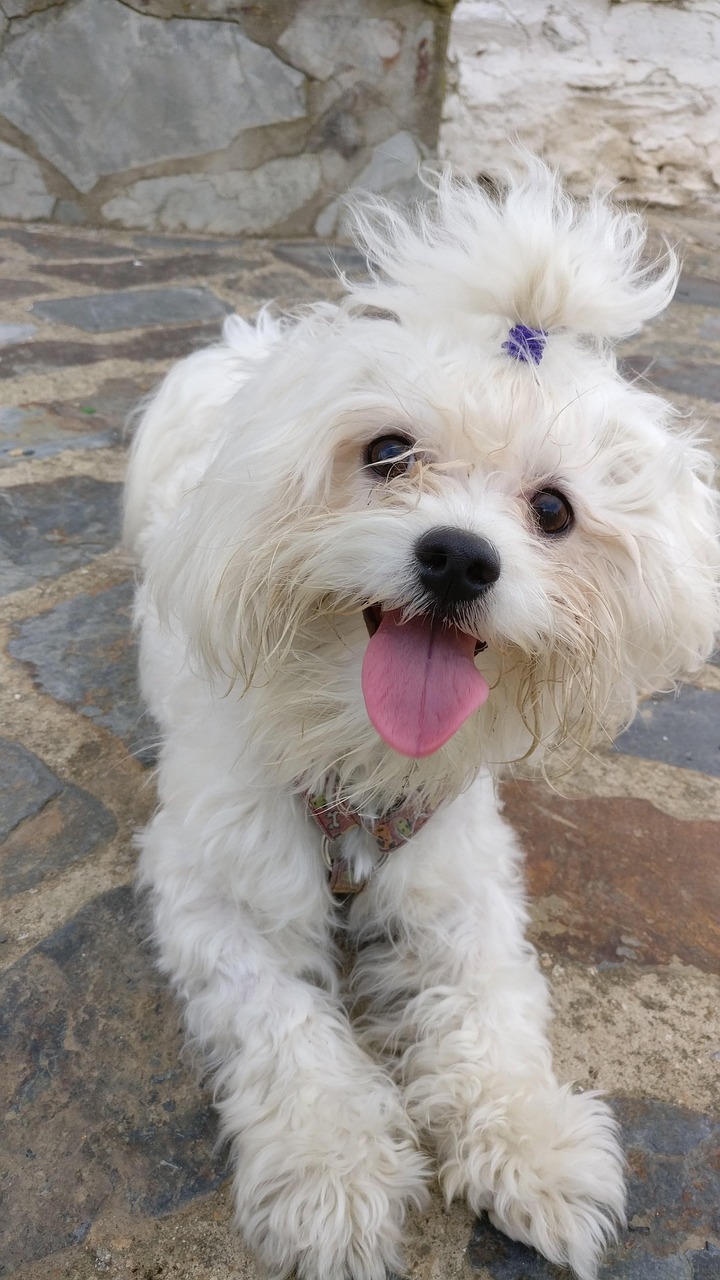
Mochi once arrived at the groomer with a mat the size of a grape tucked behind her ear — a $65 fix that a $40 clipper and ten calm minutes at home could have prevented. The lesson wasn’t really about money, though. When I finally bought clippers for Bichon Frise and tried them, she didn’t panic at the buzz. She panicked at the vibration — eleven seconds in, the hum traveled up my hand and into her skin, and she was across the room before I’d clicked off. That episode taught me more than any product page: the motor that stays calm in your hand is the one your dog will actually tolerate. A Bichon’s coat is a fluffy, cotton-candy trap that mats if you blink, and the right clipper turns a wrestling match into a six-minute tidy-up.
In this guide:
Why a Bichon’s coat is its own little engineering problem
A Bichon Frise wears a double coat: a soft, dense underlayer wrapped in a fine, curly outer coat that feels like raw cotton. That combination is what makes the breed look like a living marshmallow — and it’s also why the coat mats faster than almost any other small dog’s. Knots form where the leg meets the body, behind the ears, and in the “armpits,” usually before you notice. Left alone, a small tangle becomes a felted clump that a brush can’t fix and only clippers can safely remove. The American Kennel Club notes that regular at-home grooming is what keeps a Bichon’s coat from reaching that point.
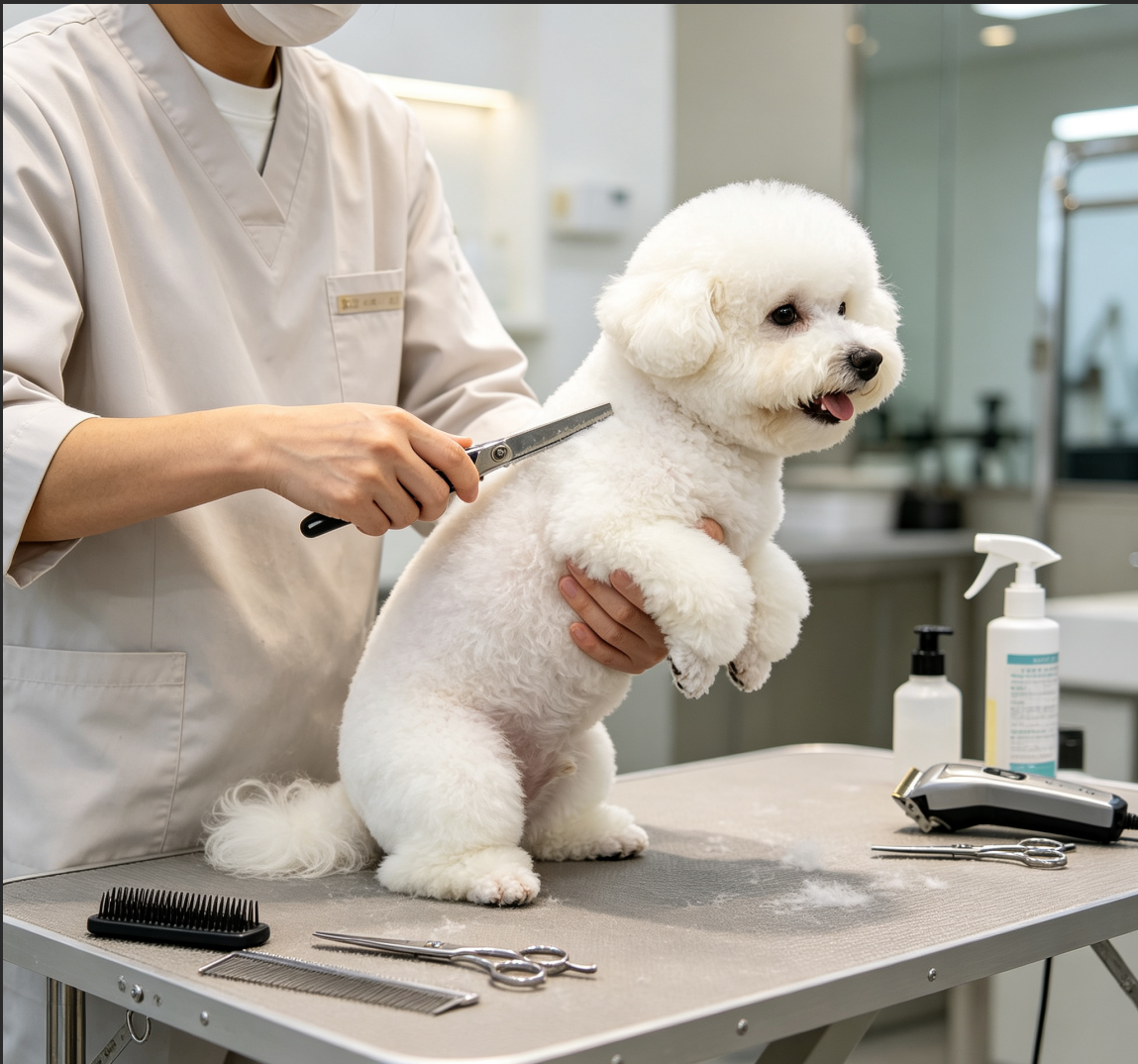
Here’s the part most buying guides skip: you are almost certainly not trying to give your dog a show cut. You’re trying to keep a pet Bichon comfortable between professional grooms, knock down the summer fluff, and deal with the occasional mystery mat. That goal changes which clipper actually makes sense — and it’s not the $200 corded “professional” unit a groomer uses on eight dogs a day.
The thing nobody tells you: vibration beats noise
Product pages shout about decibel ratings. Decibels matter, sure, but the sensation a dog hates most is the vibration — the low-frequency tickle that says “something is buzzing me.” A heavy corded clipper with a powerful rotary motor can sound tame and still feel like a tiny jackhammer against the skin. A lighter cordless unit with a well-balanced motor often feels calmer even if it’s a hair louder.
Three things to weigh, in order:
- Weight and balance. Lighter is gentler. A clipper that disappears in your palm puts less buzz into your dog.
- Motor type. Rotary motors are powerful but can vibrate more; “silent” or “low-vibration” pivot/linear motors are kinder for nervous small breeds.
- Cordless freedom. No cord means no yank, no tangle, and you can move around a wiggly dog instead of being pinned to an outlet. For a 10–15 lb Bichon, cordless is the friendlier default.
Honest trade-off: cordless clippers run on a battery that slows as it dies, so a halfway-dead unit can tug. Charge fully before a groom, and keep a corded backup if your dog needs long sessions.
Blade basics without the jargon
You don’t need a grooming degree, just three facts:
- Skip-tooth vs. finish blades. A skip-tooth blade (the chunky, gapped one) cuts bulk fast and is your friend for a matted pet coat. A “finish” blade leaves a smooth, even length for the body.
- Numbers = length. A #10 leaves hair ~1/16 inch (used near sanitary areas and pads); a #4 or #5 leaves more. Most pet owners use a guard comb over a #10 to safely leave a uniform half-inch or so.
- Ceramic vs. steel. Ceramic edges stay cooler and sharper longer, which matters because a hot blade is the fast lane to a burned, unhappy dog. They cost more and snap if dropped, but for a Bichon’s thin skin, cooler is safer.
Myth worth killing: “Shave it super short so it stays cool.” A too-short blade on thin skin risks nicks and sun sensitivity, and the coat grows back the same — it doesn’t “fix” anything. A moderate guard length is the sweet spot for a pet.
Our clippers for Bichon Frise picks
| Product | Best For | Key Feature | Check on Amazon |
|---|---|---|---|
| oneisall Cordless Clippers | First-timers, nervous dogs | Low-vibration motor, quiet, beginner kit | View on Amazon |
| Andis UltraEdge 2-Speed | Full grooms, thick mats | Corded power, skip-tooth + finish blades | View on Amazon |
| Wahl Bravura Lithium | Cordless pros, cool cuts | Ceramic edge, stays cool, 90-min runtime | View on Amazon |
| Hansprou Quiet Clippers | Budget, light touch-ups | Affordable, low-noise, guide combs | View on Amazon |
| oneisall Grooming Kit | All-in-one starter set | Clippers + scissors + comb + nail grinder | View on Amazon |
Our pick: For most pet owners, the oneisall cordless clippers are the kindest place to start — light, quiet, and forgiving. If your Bichon mats badly or you want show-length control, step up to the Wahl Bravura for its cool ceramic blade. The corded Andis is the “I mean business” option, but only if your dog already tolerates grooming.
What Mochi taught me about the first home groom
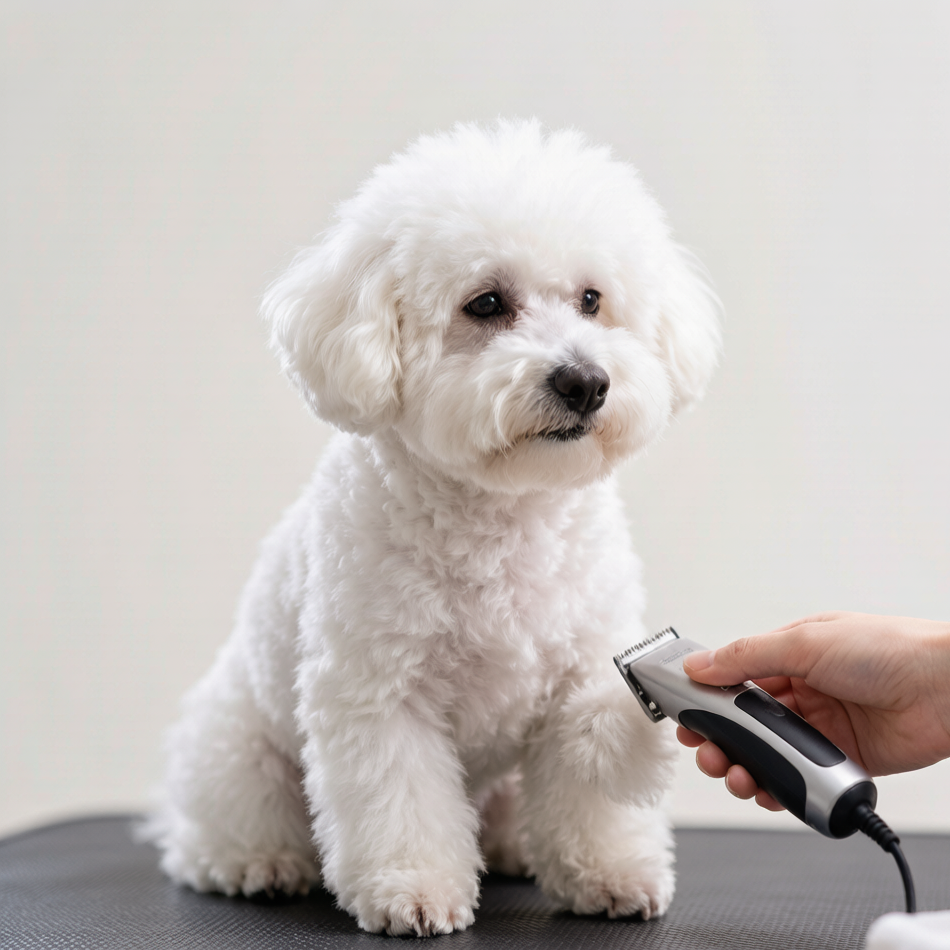
I bought a heavy corded clipper first because the reviews said “professional.” Mistake. The weight alone made my hand tired, the vibration spooked Mochi in eleven seconds, and I clipped exactly zero hair. I switched to a light cordless trimmer, let her sniff it (off), then ran it near her paw with a treat in my other hand. First real session: four minutes, a tidy belly and paw-pad trim, zero drama. The lesson wasn’t “buy better steel” — it was “match the tool to a 12-pound dog who’d rather be eating.” Start small, celebrate the tiny wins, and the coat will follow.
A 6-minute at-home touch-up
- Bathe and fully dry first. Clippers hate damp, matted fur. Pair this with a good Bichon-safe whitening shampoo so the coat is clean and tangle-free.
- Brush out every knot. If a mat won’t brush, clip under it — never pull.
- Snap on a guard comb. Half-inch is a safe pet length; don’t go bare-blade on the body.
- Go with the grain, flat to the skin. Short, calm passes. Let the blade do the work; don’t press.
- Trim paw pads and the sanitary area with a #10, then reward heavily.
- Check the blade temperature with your wrist every couple minutes. Switch to a ceramic-blade clipper if steel runs hot.
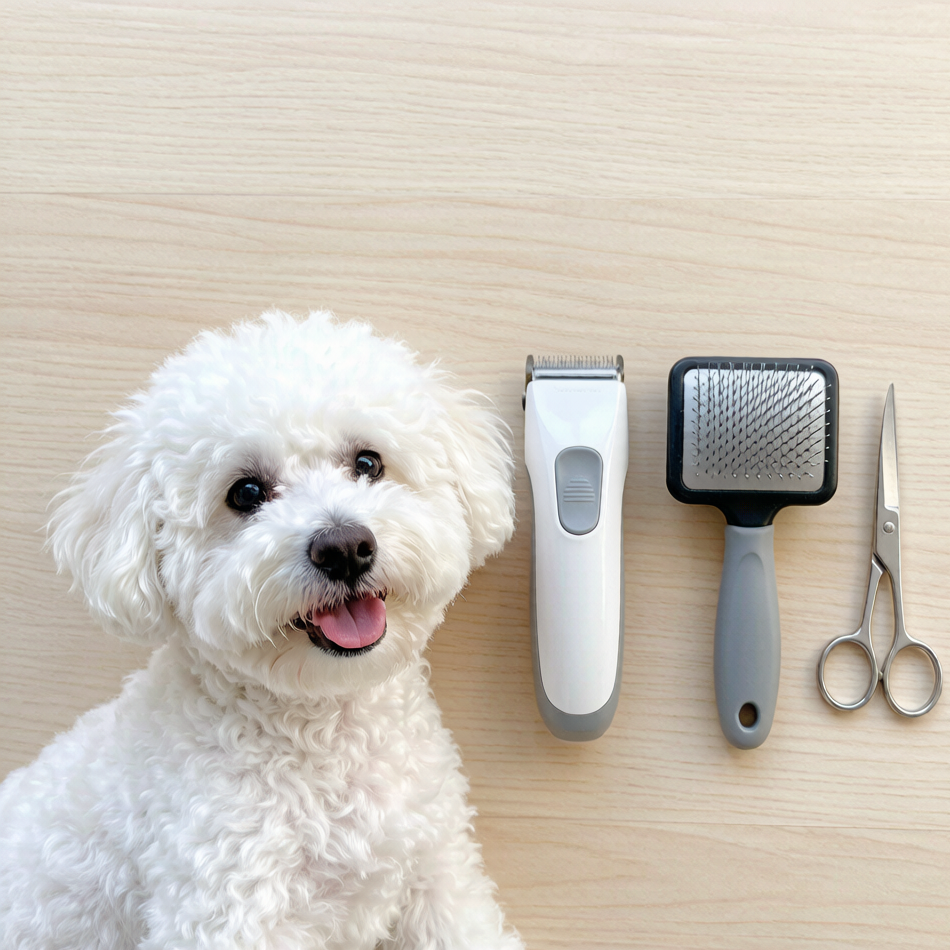
When the coat fights back
- Matted clumps — don’t rake them. Hold the skin taut and clip just under the mat. If it’s near the skin and raw, stop and call the groomer.
- Dog won’t stand for it — shorten sessions to 90 seconds, treat between passes, and try a different room. A low-vibration clipper is the single biggest fix.
- Track lines / uneven patches — overlap each pass by half and keep the blade flat. Practice on the belly where it’s least visible.
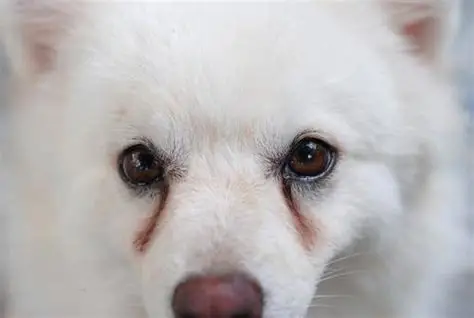
- Face and eye area — keep clippers away from the eyes. A small round-tip scissor is safer, and tidy face hair helps with tear-stain control by keeping wet fur off the skin.
Frequently Asked Questions
Can you use clippers on a Bichon Frise?
Yes — clippers are the right tool for a pet Bichon’s cottony coat, especially for paw pads, sanitary areas, and knocking down summer fluff. Use a guard comb on the body and keep the blade cool. For the face and eyes, scissors are safer than clippers.
What clippers do groomers use on Bichons?
Professionals often use corded Andis or Oster units with detachable skip-tooth and finish blades for speed and power. For home pet touch-ups, a lighter cordless clipper is usually kinder to a small, noise-sensitive dog — you don’t need salon-grade force.
Should I get corded or cordless clippers for my Bichon?
For a pet Bichon, cordless wins on kindness: no cord yank, freer movement, and lighter weight means less vibration into your dog. Corded only makes sense if you’re doing long, frequent full grooms and already have a calm dog.
What blade should I use on a Bichon?
Use a #10 with a guard comb (try a half-inch comb) for the body, and a bare #10 for paw pads and sanitary areas. A ceramic blade stays cooler than steel — worth it for thin Bichon skin. Never bare-blade the whole body.
How often should I clip my Bichon at home?
Most pet owners do a light touch-up every 3–4 weeks between professional grooms every 6–8 weeks. Focus on paw pads, the belly, and any mats — you don’t need a full haircut to keep a Bichon comfortable.
Wrapping Up
The best clippers for Bichon Frise aren’t the most “professional” — they’re the lightest, quietest, and coolest-running ones your dog will actually sit through. Match the tool to a 12-pound marshmallow, start with tiny wins, and home grooming stops being a battle. For the full coat-care picture, our Bichon shampoo guide covers the wash step that makes clipping ten times easier.
Related Reading
- Best Shampoo for Bichon Frise — bathe and detangle before you clip.
- The Great Bichon Tear Stain Battle — why tidy face hair helps with stains.
Written by Penny Hartley, certified canine trainer (CCDT) and Bichon Frise owner who learned grooming the hard way.
This article was reviewed for accuracy by Dr. Laura Mendez, DVM. It is for educational purposes only and is not a substitute for professional veterinary advice. Always consult your veterinarian about your dog’s health.
As an Amazon Associate, Love Bichon earns from qualifying purchases.