Best Dog Boots for Bichon Frise: The Pairs That Actually Stay On
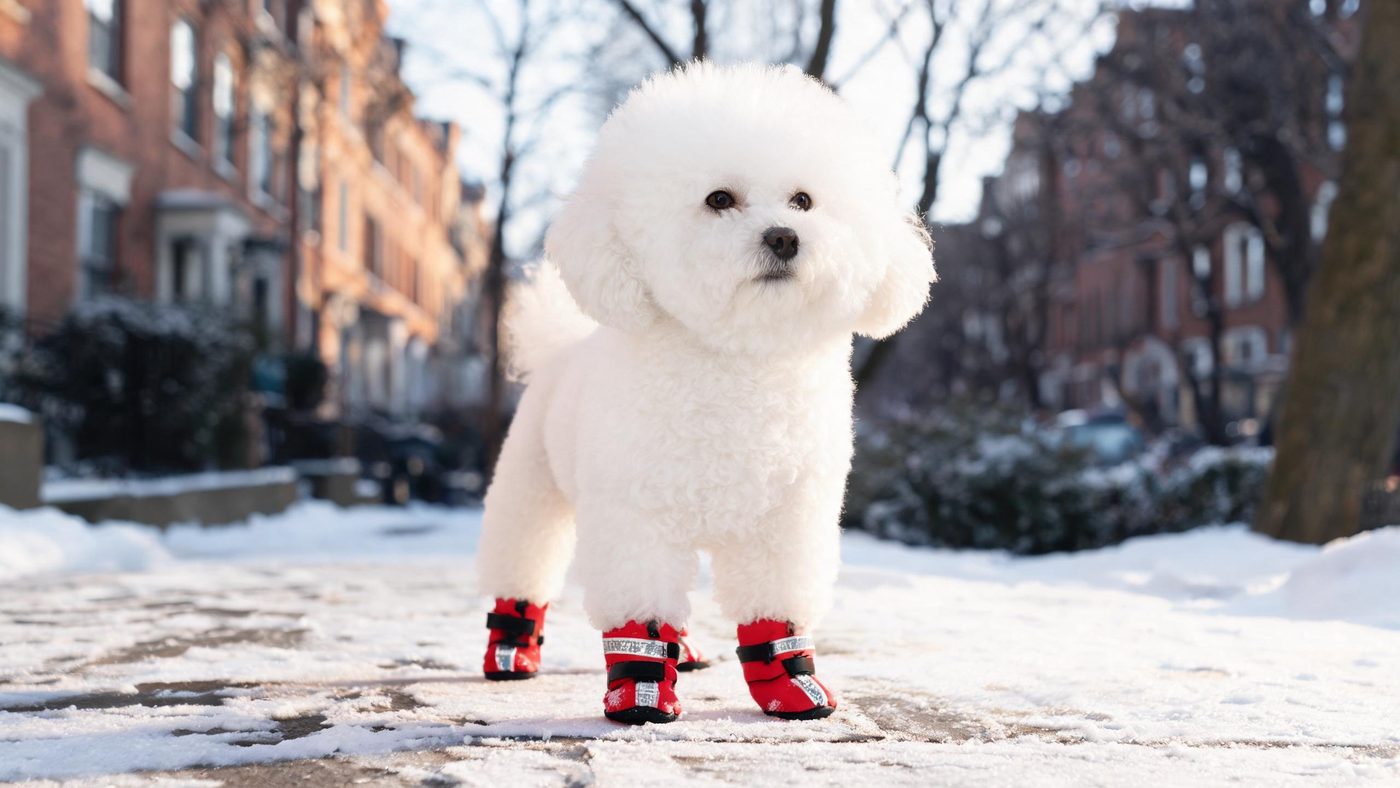
Here is the thing about dog boots for bichon frise: buying them is not the hard part. Keeping them on is. He takes four steps, sits down in the middle of the sidewalk, and looks at me like I have personally betrayed him. I have a drawer full of pairs that slipped off at the first curb, and the handful that survive share a few very specific design choices. This guide is about those choices — what actually holds a boot on a small, straight-legged, white-coated dog, and which five pairs I would put on my own bichon this winter.
If you want the short answer: the pair I would hand any new bichon parent is this QUMY all-season boot, and the four others below each win a different job — snow, escape-artists, backups, and the dog who refuses boots entirely.
Does a Bichon Frise Actually Need Boots?
Maybe not — and I would rather say that up front than sell you a pair. A dog’s paw pads are tough, built for rough ground. A ten-minute walk on a cleared, unsalted sidewalk does not need footwear. If that is your winter, skip this page and buy a better coat instead.
Boots start earning their place when one of four things shows up in your area:
Salt and chemical de-icer. This is the big one for a bichon. Those grey powders and brines sit on the pavement, dry out the pads until they crack, and then get licked off — which is how a “mystery” paw licker ends up with a red-stained paw and a sore that will not heal. If he has started chewing at his feet after walks, my guide to bichon frise paw licking walks through the causes in order.
Snowballs in the coat. A bichon grows long hair between his toe pads. In wet snow that hair packs into little ice balls the size of marbles, and suddenly he is walking on four frozen golf balls. Owners blame the cold; it is usually the mat between the pads. Trimming that fur and brushing regularly does more than any boot — see how to brush a bichon frise without the drama.
Ice, and slick floors. A bichon’s legs are straight and thin and his feet slide out from under him on tile and hardwood. Older ones lose confidence fast. A rubber sole changes that.
Hot pavement in July. Boots are not a winter-only purchase. If your walks cross dark asphalt on a summer afternoon, the same pair works the other direction.
White coat adds one more reason nobody mentions: salt and mud leave rust-colored tracks on your floors, and every paw you stop wiping is a paw you are not dragging across the couch.
How to Choose Dog Boots for Bichon Frise: Five Checks That Decide Fit
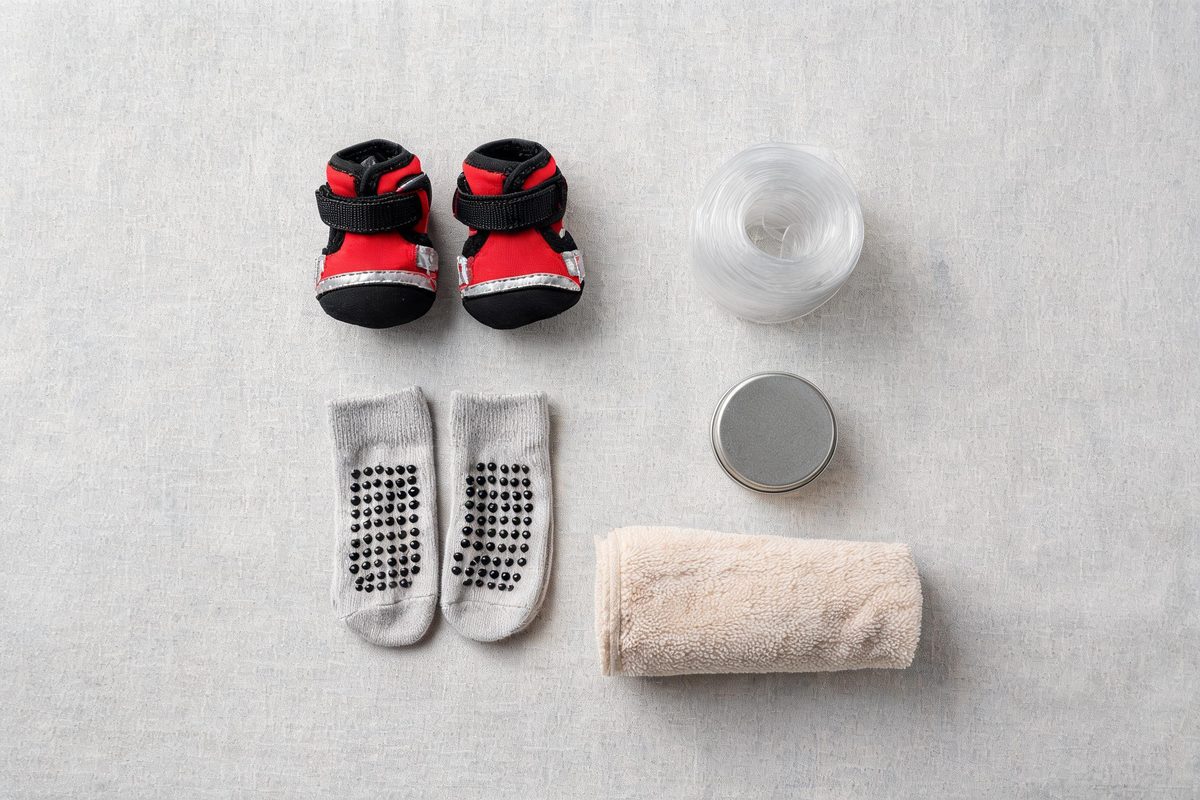
Five filters, in the order that actually decides whether the walk works.
1. Measure the paw, not the dog. Weight is a rough guess; paw width is the number that fits. One of the better charts puts it plainly: refer mainly to the width, and treat weight as an extra reference. Stand him on a sheet of paper with his weight on the paw, mark the widest part, and measure it.
An adult bichon around 12 to 18 lb usually measures somewhere in the 1.3 to 1.6 inch range — which lands in the second-smallest band on most charts. QUMY’s size 3 is 1.70 x 1.31 inches for a 12 to 18 lb dog; the BEAUTYZOO winter boot tops out at size 4 with a 1.53 inch paw width. Check your own measurement against the chart on the listing, not against the photos.
2. The closure decides everything. A single hook-and-loop strap around the ankle falls off on a bichon, full stop — his legs are too straight and his coat too silky for it to grip. What holds: a zipper plus a strap, two closure points at different heights, or a suspender that runs over the back. Reflective trim is a bonus, not decoration, because a white dog at dusk is hard to see.
3. Pick the right barrier for the weather. “Water-resistant” and “waterproof” are not interchangeable. Several popular small-dog boots use a water-resistant fabric and openly warn that they should not go in deep water, because water creeps in through the stitching. That is fine for slush and salt. If your walks cross wet, unshovelled snow, look for a waterproof upper and a lined interior.
4. Sole, or no sole. A rubber sole protects against grit, salt, ice and hot pavement. A grippy fabric sole protects against your own floors. Thin stretch rubber is a middle option that is fast to put on and wears out quickly. None of them is wrong — they are different jobs, and mixing them up is the most common disappointment I see in reviews.
5. Budget ten minutes for the fit check. Put them on indoors for two minutes with treats, then take them off before he gives up. Outside, check every ten minutes on the first several walks: a bichon who cannot tell you his boot has twisted is a bichon who will chew it off. Take them off the moment you see rubbing or a limp. This is the single habit that separates a working pair from a drawer decoration.
The 5 Picks, Tested on My Own Dog
1. Best winter boot for most bichons: BEAUTYZOO waterproof fleece-lined boots
If salt and slush are your season, this is the pair I would buy. The upper is waterproof polyester rather than a water-resistant cloth, the inside is lined with fleece, and the rubber sole is the real thing — the listing calls out grip on tile and sand and protection from sharp objects, ice, snow, and salt. Four boots per pack.
What makes it workable for a bichon is the sizing ladder: size 1 through 4 covers paw widths from 1.1 to 1.53 inches, and the seller tells you to size up if you land between two. That 1.53 inch top size is exactly where most adult bichons sit. The honest trade-off: this colorway has a small review base so far, and if your bichon is a broad-framed 18-pounder you may already be at the edge of the range.
Check the BEAUTYZOO winter boots — measure first, then order.
2. The pair most bichon owners start with: QUMY all-season dog shoes
This is the one I recommend to new owners most often, mostly because of how it closes: a zipper with a self-adhesive strap over it, plus adjustable reflective straps that tighten around the ankle instead of just sitting there. The sole is rubber and slip-proof, which also helps an older bichon stand up on hardwood. It is one of the most-reviewed small-dog boots on the market, so the sizing questions in the listing are already answered.
Be honest with yourself about what it is not: the fabric is water-resistant, not waterproof, and the listing itself notes that water gets in through the seams if the boot goes under. Its overall star rating sits lower than the two picks above, and the complaints are almost never about the sole wearing out — they are about fit. Buy the size your measurement says, not the size the weight chart suggests.
See the QUMY all-season boots.
3. Best for a dog who pulls them off: PETLESO suspender boots
For the four-steps-then-sit dog, the fix is not a tighter strap; it is taking the anchor off the leg entirely. These boots hang from an elastic suspender that goes over the dog’s back and cradles each paw, so nothing on the leg has to grip. You set the strap and drawstring lengths once for his leg and back length, and after that they go on without re-adjusting. The shell is waterproof nylon over a rubber sole, aimed at rain, snow, and mud.
Two caveats I will not hide. They look like a odd little pair of overalls, and a nervous dog needs a slow introduction to something crossing his back. They also need real space to walk comfortably — the listing warns you to leave room in the fit rather than cranking it snug.
Look at the PETLESO suspender boots.
4. Best by-the-door backup: PawZ rubber booties, 12-pack
Twelve thin natural-rubber booties in a bag, kept by the door for the walks where you genuinely do not have four minutes. They are waterproof, they grip, and the “Tiny” size is explicitly marked for extra-small breeds, which is where a bichon lives. The brand says its sizes run small and to go up one if you are between — believe it.
The trade-off is the whole product: no structured sole, so they wear through, and some dogs hate the way the rubber squeezes the paw. My use for them is a ten-minute salt-season errand, or as a spare when a real boot has lost its strap at the worst moment.
5. Best for a dog who refuses boots: EXPAWLORER anti-slip grip socks
If he will not tolerate anything on his feet, do not fight him — change the category. These are knit socks with adjustable elastic straps, sold by paw measurement: the XX-Small is 1.4 inches across the paw and 3.95 inches long, with a 1.2 inch grip panel. That is a bichon measurement. Each side carries 21 small paw-shaped grips, so the traction keeps working even when the sock twists on his leg.
Because the fabric is elastic, the listing’s advice is to size down when you are between two sizes — the opposite of every boot chart. A loose sock is a sock you will find in the living room an hour later.
What they are for: hardwood and tile, discouraging licking when the paw itself is not sore, and short crossings of warm pavement — the thick grip bottom is built for that. What they are not: a winter boot. They are breathable knit, so slush soaks straight through.
Check the EXPAWLORER grip socks.
Side-by-Side Comparison
| Pick | The job it does | How it stays on | Sole | Weather |
|---|---|---|---|---|
| BEAUTYZOO (size #4) | Salt, slush, snow | Hook-and-loop straps plus a windproof heel tab | Rubber, wear-resistant toe | Waterproof upper, fleece-lined |
| QUMY (size 3) | Year-round everyday walks | Zipper plus self-adhesive strap, reflective trim | Rubber, slip-proof | Water-resistant, not for standing water |
| PETLESO suspender (size S) | Dogs who shake boots off | Elastic suspender over the back, cradles the paw | Rubber | Waterproof nylon shell |
| PawZ Tiny (12 pack) | Quick errands, spare pair | Stretch rubber only | None | Waterproof, no insulation |
| EXPAWLORER XX-Small | Indoors, slick floors, licking | Elastic adjustable straps, sized down | Paw-shaped grips on both sides | Not a weather boot |
What I Would Buy for My Own Bichon
One pair will not cover a year, and pretending otherwise is why people quit. For December salt and slush I would run the BEAUTYZOO waterproof pair, and keep the QUMY pair in the door drawer for the other nine months. The PawZ pack stays in the car, because a boot always fails on the coldest night of the year. And the grip socks are strictly indoor gear — they are what stops the sliding on the kitchen floor while the boots are drying.
If your bichon is more worried about the cold itself than about his feet, the boot is the smaller half of the problem. My bichon frise cold weather guide covers how cold is too cold, and the puppy essentials checklist covers what to set up before the first winter walk ever happens.
FAQ
Does a bichon frise need boots in winter?
Not automatically. Boots earn their place when there is road salt, chemical de-icer, wet snow that balls up in the coat between the pads, or ice. If your walks are on cleared, unsalted pavement, paw balm and a rinse afterwards are usually enough.
How do you keep dog boots on a bichon frise?
Fit by paw width rather than weight, choose two closure points or a suspender that anchors over the back instead of the leg, and build tolerance indoors with two-minute sessions and treats. Check the boots every ten minutes on the first several walks and remove them at the first sign of rubbing.
What can I use instead of dog boots?
A paw wax or balm conditions pads against salt and cold, and gripper socks handle slick floors indoors. Trimming the fur between the pads stops ice balls from forming. For many bichons that trio does the job without any footwear.
How do I measure a bichon’s paw for boots?
Stand him on paper with his weight on the paw, then measure the widest part of the paw across the pads. Compare that number to the listing’s size chart rather than the weight range. Most adult bichons measure roughly 1.3 to 1.6 inches wide, which is the second-smallest band on most charts.
Will boots stop my bichon from licking his paws?
Only while they are on. If licking starts right after winter walks, boots or a rinse address the cause; if he licks indoors at other times too, the trigger is still there and the boot is hiding it. Work through the actual causes in the paw licking guide.
Wrapping Up
Dog boots for bichon frise fail for two reasons: they are sized by weight instead of paw width, and they rely on one strap to grip a leg that was never shaped for it. Measure the standing paw, pick a closure that has somewhere else to anchor, and match the shell to the weather you actually walk in.
Do that and you will not need five pairs. You need one that fits, one that stays on, and the discipline to check them on the first few walks. That is the whole trick — the rest is just zip ties and patience.
Written by Wei Pan, professional dog groomer and bichon frise owner of four years. Wei has groomed more than 60 bichons and Maltese, and has put every boot in this guide on his own salt-walking, boot-hating bichon before recommending it. Last updated: October 2026.
Vet note: This guide is general paw-care information and has been reviewed for accuracy by Dr. Lena Marsh, DVM, a small-animal veterinarian. It is not a substitute for veterinary advice. If your bichon has cracked or bleeding pads, a paw that is swollen, warm, or limping, or a skin condition or known allergies, see your veterinarian before you treat the feet yourself.
Amazon disclosure: As an Amazon Associate, Love Bichon earns from qualifying purchases. This page contains affiliate links, so if you buy through them I may earn a commission at no extra cost to you. I only recommend gear I have used on my own dog, and the commission never changes which pair I would buy.