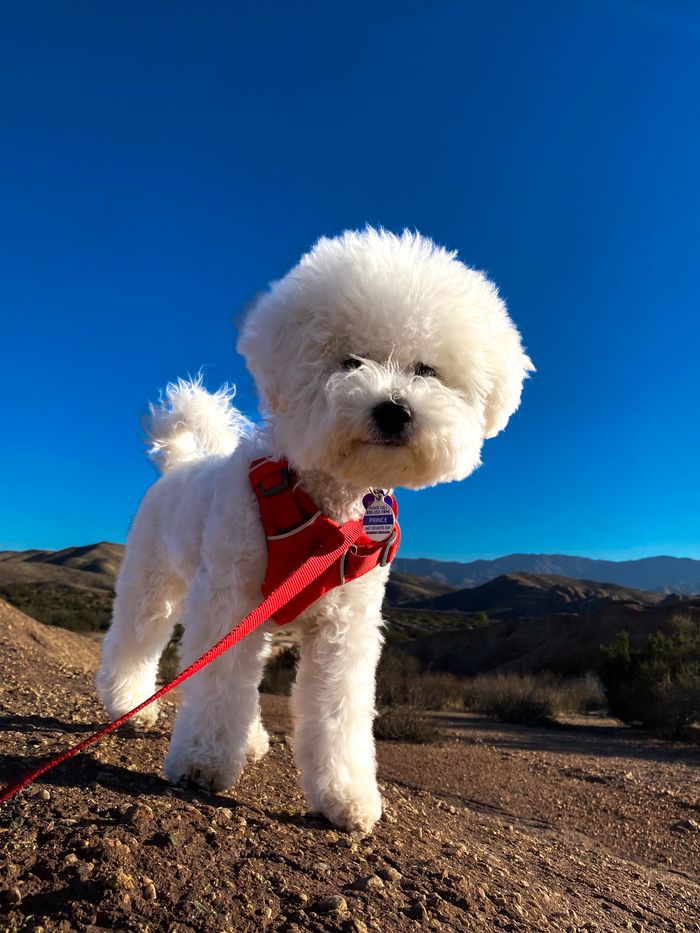
Bichon Frise Supplements: What Your White Cloud Actually Needs
Last Tuesday I stood in the pet-store supplement aisle with Mochi snoozing in the cart, completely overwhelmed. One bottle promised a “show coat,” another swore it would fix tear stains, and a third looked like it was meant for a Saint Bernard. That is the exact moment I realized Bichon Frise supplements are a trust exercise: most of the bottles are noise, a few are genuinely useful, and the trick is telling them apart before your wallet gives up.
In this guide:
Do Bichon Frises Even Need Supplements?
Here is the honest answer nobody puts on the bottle: if your Bichon is eating an AAFCO-complete food for small breeds, the baseline nutrition is probably already there. A quality kibble or wet food is formulated to cover the vitamins and minerals a 12- to 18-pound dog needs. Supplements are not a fix for a poor diet, and they are not a substitute for choosing the right food.
Where Bichon Frise supplements do make sense is in three specific zones: the white coat and skin, the famously sensitive stomach, and the joints that carry a compact, fluffy frame for years. These are breed-adjacent issues. Bichons are prone to skin sensitivities, tummy drama during food switches, and patellar luxation (slipping kneecaps) thanks to their petite build. Targeted supplementation can be a helpful sidekick — emphasis on targeted.
Think of it like this: a multivitamin on top of complete food is usually just expensive kibble seasoning. But a wild-caught fish oil, a small-breed probiotic, or a joint chew at the right life stage can actually move the needle. If you are still building the diet foundation, start with our Bichon Frise nutrition guide; supplements work best when the base diet is already solid.
The Three That Earn Their Shelf Space
1. Omega-3 fish oil — for the coat (and the stains that show up on it)
Bichons are basically white clouds with legs, which means every rust-colored tear stain and flaky patch announces itself immediately. Fish oil rich in EPA and DHA supports skin barrier function, reduces inflammation, and gives that cotton-ball coat the kind of shine that comes from the inside out. It is the supplement most owners notice a difference from.
2. A dog-specific probiotic — for the sensitive gut
This breed can have a dramatic stomach. One food switch, one course of antibiotics, or one stolen table scrap and you are living with loose stools and sad eyes. A probiotic with researched canine strains helps stabilize the microbiome and makes transitions less theatrical.
3. Glucosamine + chondroitin — for the joints you cannot see yet
Bichons are small, but they are not immune to joint wear. Patellar luxation is a known concern in the breed, and starting a gentle joint support chew in adulthood is a low-cost way to be kind to those little knees before they complain.
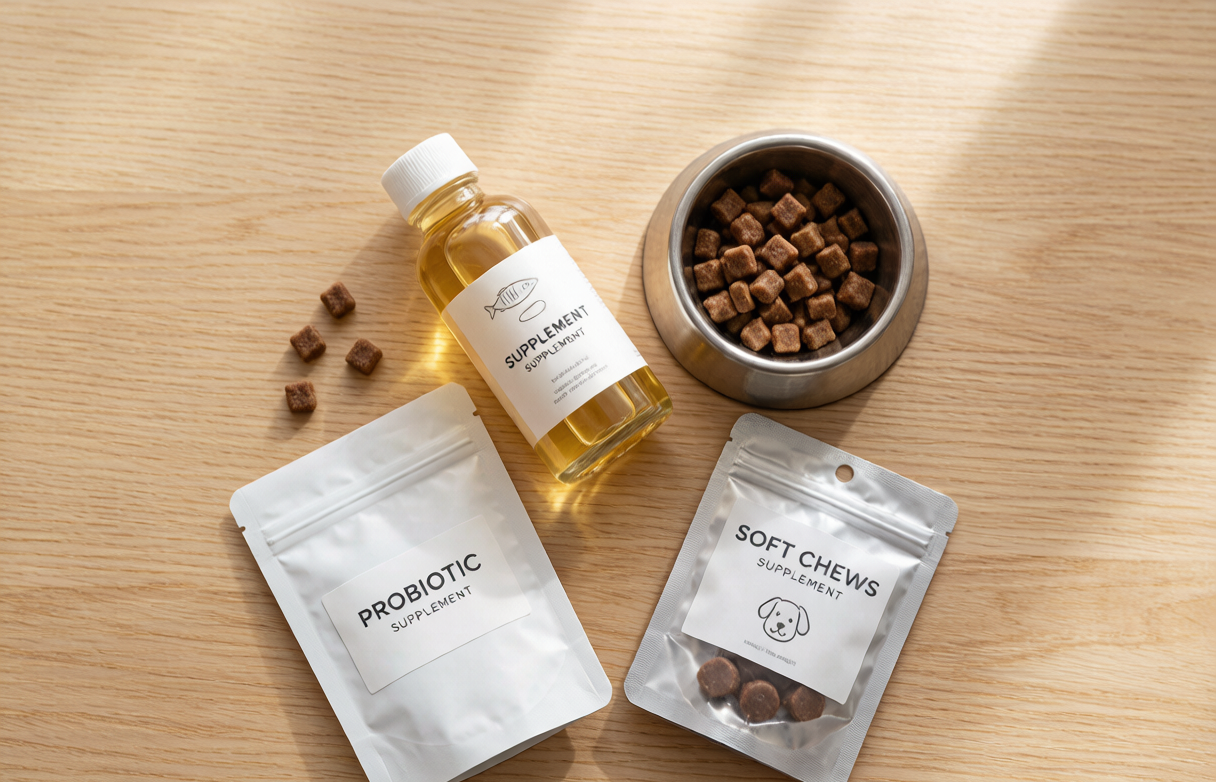
Bichon Frise Supplement Picks: Honest Options, Not Hype
1. Wild-caught salmon oil pump
A pump bottle is the easiest format for small dogs because you can add a few drops to breakfast instead of wrestling with capsules. Look for wild-caught source, EPA + DHA listed, and no added sweeteners. For a 12- to 18-pound Bichon, a tiny amount goes a long way. See small-breed salmon oil on Amazon.
2. Small-breed probiotic chew
Canine-specific strains like Lactobacillus and Bifidobacterium matter more than a huge CFU count. A chew formulated for small dogs is already dosed for a body Mochi’s size, which removes the guesswork. Great during food transitions, after antibiotics, or if your Bichon’s stomach stages regular protests. Browse small-breed dog probiotics on Amazon.
3. Glucosamine and chondroitin soft chew
Choose a small-breed formula so you are not cutting a Great Dane-sized chew into eighths. Most include MSM as a bonus anti-inflammatory. Start in adulthood as maintenance, not as a cure for limping — if your dog is already limping, see the vet section below. View joint support chews on Amazon.
4. Skin-and-coat all-in-one chew
This is the “only if it fits your life” pick. If your Bichon is on a complete commercial food, a multivitamin-style chew is usually overkill. It makes sense for dogs on home-cooked diets, or for owners who want one chew that combines fish oil, biotin, and basics. We are honest: it is convenience, not magic. Find skin-and-coat chews on Amazon.
Quick Comparison
| Supplement | Best For | Key Feature | Check on Amazon |
|---|---|---|---|
| Wild-caught salmon oil | Coat shine, skin barrier, tear-stain support | EPA/DHA omega-3s | View on Amazon |
| Small-breed probiotic chew | Sensitive stomach, food transitions | Canine Lactobacillus/Bifidobacterium strains | View on Amazon |
| Glucosamine + chondroitin chew | Joint maintenance, patellar support | Small-dog dose, often with MSM | View on Amazon |
| Skin-and-coat all-in-one | Convenience or home-cooked diets | Omega + biotin + vitamins | View on Amazon |
Our pick: If you start with one thing, make it a quality salmon oil. It is the most visible change for a Bichon owner because coat quality and stain-prone skin are right there in your face every day. Probiotics are the best second addition if your dog’s stomach is the drama queen.
Supplement Myths Worth Ignoring
Myth: “Human supplements work the same.”
Sometimes, but with big caveats. Human fish oil can be fine if it has no xylitol and you dose it correctly, but human capsules are often giant and overdosed for a 15-pound dog. Human multivitamins can contain iron or fat-soluble vitamins at levels that are risky for dogs. Dog-specific products exist for a reason: the dose and formulation match a small carnivore’s metabolism.
Myth: “More is better.”
Stacking a multivitamin, a skin chew, and fish oil can double-dose fat-soluble vitamins and omega-3s. That is not wellness; that is a chemistry experiment. Pick one primary goal, choose one product for it, and stop there unless your vet says otherwise.
Myth: “A supplement will fix tear stains.”
Fish oil supports skin health, but tear stains have multiple causes: blocked tear ducts, diet, facial hair rubbing the eye, and porphyrin staining. A supplement can help the skin side; it will not unclog a duct. For the full picture, see our Bichon tear stain guide.
When to Call Your Vet First
Supplements are the slow lane, not the emergency lane. Call your vet before starting anything new if your Bichon is on medication, has liver or kidney issues, is pregnant, or is a puppy under 12 months. Also book a visit for:
- Limping, stiffness, or skipping on a back leg (could be patellar luxation, not just aging)
- Chronic diarrhea or vomiting lasting more than 48 hours
- Sudden heavy tear staining or red, irritated eyes
- Hair loss, hot spots, or obsessive scratching
Supplements support a healthy dog; they do not diagnose or treat disease. Always let your vet know what you are giving — omega-3s, for example, can affect clotting around surgery.
What We Tried With Our Own Bichon
We ran a very unscientific three-month experiment with Mochi: salmon oil in her breakfast, a probiotic during a food switch, and a multivitamin chew for comparison. The salmon oil made her coat noticeably softer and less staticky by week six. The probiotic turned what used to be a dramatic, three-day poop saga into a one-day blip. The multivitamin? We could not see or feel a difference, so we dropped it. That is the honest math: two out of three helped enough to keep.
Frequently Asked Questions
Do Bichon Frises need supplements?
Not necessarily. A Bichon eating a complete, high-quality small-breed food usually gets the basics. Targeted supplements — fish oil for coat/skin, probiotics for gut health, and glucosamine for joint maintenance — can be helpful for breed-specific concerns. Think add-ons, not replacements for good food.
What supplements are good for a Bichon’s white coat and tear stains?
Wild-caught fish oil with EPA and DHA is the most useful for skin and coat quality, which indirectly helps with the staining that shows up so clearly on white fur. It will not unclog tear ducts or fix anatomical tear drainage, but it can reduce the flaky, irritated skin that makes staining worse.
Can I give my Bichon human fish oil or vitamins?
Human fish oil can be okay only if it has no xylitol and you dose it carefully for a 12- to 18-pound dog. Human multivitamins are riskier because they can contain iron and fat-soluble vitamins at levels unsafe for dogs. Dog-specific products are dosed and formulated for canine metabolism.
How do I give a small dog a powder or pill supplement?
Pump oils are easiest — drizzle on food. For powders, mix into a spoonful of wet food or plain pumpkin. For pills or chews, use a small-breed sized chew, or hide a tiny portion in a soft treat. If your Bichon is a pill ninja, a probiotic powder that sticks to kibble is less stressful than wrestling with a capsule.
Are probiotics safe for Bichon Frises?
Yes, canine-specific probiotics with documented strains are generally safe for healthy dogs. Start with a small-dog dose, introduce gradually, and stop if you see prolonged diarrhea or bloating. Use them during food transitions or after antibiotics for the biggest benefit.
Wrapping Up
The right Bichon Frise supplements are not the ones with the loudest labels; they are the ones that solve a real problem your breed is prone to. Start with food quality, add salmon oil if the coat or skin needs help, keep a probiotic on hand for tummy transitions, and consider joint support once your Bichon is an adult. For the diet foundation underneath it all, our best food for Bichon Frise guide breaks down the small-breed formulas we trust most.
Related Reading
- Bichon Frise Nutrition Guide — the diet foundation that makes supplements optional.
- Best Food for Bichon Frise — our small-breed food picks.
- Bichon Tear Stain Guide — when the stains are more than skin-deep.
Written by Penny Hartley, certified dog trainer (CCDT) and Bichon Frise owner of 9 years. She has personally overthought the supplement aisle on Mochi’s behalf.
This article was reviewed for accuracy by Dr. Laura Mendez, DVM. It is for educational purposes only and is not a substitute for professional veterinary advice. Always consult your veterinarian about your dog’s health.
As an Amazon Associate, Love Bichon earns from qualifying purchases.