The Best Shampoo for Bichon Frise: A Whiter Coat Without the Itch
Nobody warns you that owning a white dog is basically a part-time laundry job. One muddy walk, one enthusiastic roll in the grass, and your cotton ball comes home looking like a dish rag. So you grab whatever bottle is on sale, scrub, rinse — and a week later the coat is dull, the beard is still rusty, and your dog is scratching like she’s got somewhere to be. Finding the best shampoo for Bichon Frise coats isn’t about buying the fanciest bottle. It’s about matching three things at once: a curly double coat, skin that’s famously touchy, and fur that shows every single stain.
Short on time? The bottle we reach for most often is a brightening whitening shampoo made for white coats — it lifts the dingy yellow without bleach. But stick around, because the wrong whitening formula on itchy skin makes everything worse, and that part is worth two minutes of your time.
In this guide:
Why a Bichon’s Coat Needs Its Own Shampoo
Bichons aren’t just small dogs with white fur. Three things about them change what should go in the bottle.
That double coat holds onto everything
A Bichon has a soft undercoat under a curly outer coat, which is exactly why they barely shed — the loose hair gets trapped instead of landing on your couch. Great for your rug, annoying at bath time. Thick lather sinks in and hides there, and any residue you don’t rinse out turns into flaky, itchy skin about three days later.
Practical takeaway: a shampoo that rinses clean beats a shampoo that foams dramatically. Concentrates you dilute in a jug of warm water actually spread better through curls than gloppy shampoo squeezed straight onto the back.
White shows everything, including chemistry
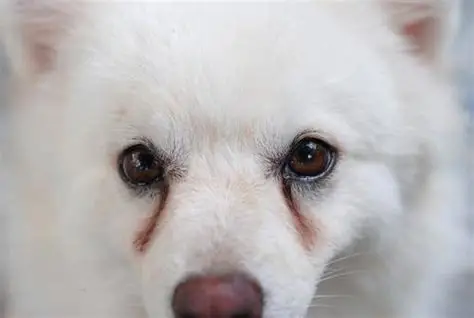
The rusty tint around the eyes and mouth usually isn’t dirt. It’s porphyrin — iron-based pigment in tears and saliva that oxidizes to reddish-brown once it hits air and light. No shampoo removes it permanently, because it keeps arriving with every tear and every drink of water. What a good whitening wash does is neutralize the yellow cast on the rest of the coat so the staining stops looking like the dog’s natural color. For the stains themselves, daily face care does more heavy lifting — our Bichon Frise tear stain guide walks through that routine.
Bichon skin is allergy-prone
This is the part people skip. The breed is well known for atopic dermatitis and contact allergies — the American Kennel Club lists skin allergies among the breed’s most common health concerns, and any groomer who’s handled a few Bichons will tell you the same. Heavy fragrance, dyes and harsh detergents land differently on this breed than on a Lab.
Human shampoo is a hard no here, and it’s not marketing talk. Human skin is acidic (around pH 5.5); dog skin sits closer to neutral, roughly pH 6.5–7.5. Wash a dog in a formula built for our pH and you strip the protective barrier, which shows up as dandruff and scratching.
How to Choose the Right Shampoo for Your Bichon
Four filters, in this order. The order matters — skin comfort outranks coat brightness every time.
- Skin first. If your dog is already scratching, chewing paws or flaking, start with an oatmeal or hypoallergenic wash and leave whitening for later. Brightening formulas are fine on healthy skin and irritating on inflamed skin.
- Whitening type. Most whitening shampoos use optical brighteners or a bluing agent that cancels yellow tones — the same trick as purple shampoo for blonde hair. They’re safe when rinsed properly, but they don’t bleach and they won’t erase tear stains. Anything promising to “remove” stains in one wash is overselling.
- Ingredient list you can read. Aim for no artificial dyes, no heavy perfume, no soap or sulfate blends on sensitive dogs. Oatmeal, aloe and glycerin are the boring ingredients that quietly work.
- Tearless for the face. The muzzle and eye area need washing more often than the body. A tearless formula lets you clean that beard weekly without a stinging-eyes wrestling match.
Best Shampoos for Bichon Frise (Compared)
These are the bottles we’d actually put in our own cart, sorted by the job they do rather than by ranking. Most Bichon households end up with two: a body shampoo and something gentle for the face.
| Shampoo | Best For | Key Feature | Price Tier | Check on Amazon |
|---|---|---|---|---|
| Whitening / brightening shampoo | Dull, yellowing white coats | Optical brighteners, no bleach | $8.97 | View on Amazon |
| Oatmeal & aloe shampoo | Itchy, flaky, dry skin | Soap-free, colloidal oatmeal | $18.99 | View on Amazon |
| Hypoallergenic / medicated wash | Allergy flare-ups, vet-flagged skin | Fragrance-free, dye-free | $14.99 | View on Amazon |
| Tearless face & puppy shampoo | Beard, muzzle, puppies | No-sting around the eyes | $16.69 | View on Amazon |
| Detangling conditioner spray | Curls that mat after a bath | Leave-in, brush-through slip | $15.99 | View on Amazon |
| Waterless foam cleanser | Between-bath touch-ups | No rinse, dries fast | $14.99 | View on Amazon |
For a dingy white coat: a whitening shampoo
If your Bichon looks more “old sock” than “fresh snow,” this is the fix. Brightening formulas are usually concentrated, so dilute them — a capful in a bottle of warm water goes further and rinses out far more easily than pouring it straight on. Leave it on for a couple of minutes before rinsing, and expect a noticeable lift after two or three baths, not a transformation on day one. Check the current price.
Trade-off worth knowing: whitening formulas can be drying with frequent use. Alternate with an oatmeal wash if you bathe more than twice a month.
For itchy or flaky skin: oatmeal and aloe
Colloidal oatmeal is the least glamorous ingredient in dog grooming and one of the most reliable. A soap-free oatmeal shampoo calms the low-grade itch that makes a Bichon scratch at 3 a.m., and it won’t strip the coat. This is where we’d start with any dog that’s already uncomfortable — get the skin calm first, chase the brightness later. See it on Amazon.
If the itching is seasonal or year-round rather than post-bath, shampoo alone won’t solve it. Diet plays a real role too — our breakdown of the best food for a Bichon Frise covers the protein and sensitivity angle.
For the face: a tearless formula
The beard gets dirty daily; the body doesn’t. Keeping a small bottle of tearless shampoo for muzzle-only washes means you can clean the stained area twice a week without over-bathing the whole dog. It’s also the right pick for puppies, whose skin is thinner and more reactive than an adult’s. Look it up on Amazon.
Our pick: for most Bichons with healthy skin, a whitening shampoo plus a tearless face wash covers 90% of what you need. If your dog scratches, flip the order — oatmeal or hypoallergenic first, whitening only once the skin has settled. There’s no single bottle that’s right for every Bichon, and anyone telling you otherwise hasn’t met enough of them.
Two Extras Worth Keeping in the Cupboard
- Leave-in detangler spray — curly coats mat while they dry, especially behind the ears and in the armpits. A light spritz before brushing saves you (and your dog) a lot of tugging. See it on Amazon.
- Waterless foam — for muddy paws and the “what did you roll in?” moments that don’t justify a full bath. It’s also handy for senior dogs who find bath time stressful. See it on Amazon.
Bath-Day Tips That Make Any Shampoo Work Better
- Brush before you wet. Water turns an existing tangle into a solid mat. Five minutes of brushing beforehand saves an hour of detangling after.
- Dilute the shampoo. Mix it in a squeeze bottle with warm water. Better coverage, easier rinse, less product used.
- Rinse twice as long as you think. Leftover residue is the number one cause of post-bath itching in curly coats. When you think you’re done, keep going for another minute.
- Dry all the way down. A damp undercoat is how mats and hot spots start. Towel first, then blow dry on low while brushing outward.
What Worked on Our Own Dog
Mochi went through a stretch where she looked permanently grubby, and we assumed we just weren’t bathing her enough. So we bathed her weekly with a whitening shampoo. Wrong call. Two weeks in she was flaky, scratching, and somehow no whiter.
What actually fixed it: dropping to a bath every three weeks, switching the body wash to oatmeal, and using a tearless shampoo on her face twice a week instead. The whitening shampoo came back into rotation once a month, diluted. The coat brightened up within about six weeks — slower than we wanted, but it held. The lesson we’d pass on is that over-bathing undoes a good shampoo faster than a cheap shampoo does.
Frequently Asked Questions
How often should you bathe a Bichon Frise?
Every three to four weeks suits most Bichons, with spot-cleaning of the face and paws in between. Grooming salons often work on a similar cycle. Weekly full baths tend to dry out the skin unless your vet has recommended a medicated schedule.
Can I use human shampoo or baby shampoo on my Bichon?
Better not to, even the gentle baby kind. Human formulas are built for more acidic skin and will gradually strip the coat’s protective oils, which shows up as dandruff and itching. In a genuine pinch, plain warm water and a washcloth is the safer improvisation.
Do Bichons need conditioner?
They benefit from it. The curl that makes the breed look like a cloud is also what makes it mat. A rinse-out conditioner or a leave-in detangling spray gives the brush enough slip to get through the coat without pulling. If you keep your dog in a short puppy cut, you can often skip it.
Which shampoo is best for Bichon tear stains?
A tearless face wash used two or three times a week does more than any whole-body shampoo, because the staining is caused by tear pigment that keeps returning. Whitening shampoo improves the surrounding coat but won’t clear the stain itself. The full routine is in our ultimate Bichon Frise tear stain guide.
What’s the best shampoo for a Bichon Frise puppy?
A tearless, soap-free puppy formula, and not too often — puppy skin is thinner and reacts more easily. Save whitening shampoos until your puppy is comfortable with the whole bath routine, usually somewhere past the six-month mark.
Wrapping Up
The best shampoo for a Bichon Frise is the one that matches your dog’s skin, not the one with the whitest bottle on the shelf. Calm skin first, brightness second, tearless for the face, and a longer gap between baths than you’d expect. Do that for a couple of months and the coat looks after itself.
Next up, if the rusty beard is your main headache: our guide to beating Bichon tear stains picks up exactly where the shampoo leaves off.
Related Reading
- Best Food for Bichon Frise — because skin and coat problems often start in the bowl.
- The Ultimate Bichon Frise Tear Stain Guide — the full daily routine for that stained face.
- Best Harness for Bichon Frise — gentler on a small windpipe than a collar, and it won’t rub the coat into mats.
Written by the Love Bichon team — Bichon Frise owners who figure everything out the hard way with our own dog, Mochi.
This article was reviewed for accuracy by a licensed veterinarian (DVM). It is for educational purposes only and is not a substitute for professional veterinary advice. Always consult your veterinarian about your dog’s skin and coat health, especially if the itching is persistent.
As an Amazon Associate, Love Bichon earns from qualifying purchases.